
How to Wash Your Baby’s Playmat: The Ultimate Guide

You can wash most baby playmats effectively using cold water (15°C to 20°C / 59°F to 68°F) on a delicate machine cycle, or with material-specific cleaners: baking soda for foam mats, mild soapy water for fabric mats, and a vinegar solution for rubber mats. The right method depends on your playmat’s material — using the wrong approach can damage the mat’s structure or reduce its shock-absorbing properties.
In this guide, you’ll find step-by-step instructions for each cleaning method, plus maintenance tips to extend your playmat’s lifespan.
Quick Reference: Play Mat Types and Cleaning Methods
| Play Mat Type | Material | Recommended Cleaning Method | Water Temperature | Durability |
|---|---|---|---|---|
| Foam Play Mat | Closed-cell polyethylene foam (30–45 kg/m³ density) | Baking soda paste or machine wash (gentle cycle) | Cold (15°C–20°C / 59°F–68°F) | 200–500g per tile; up to 30 wash cycles before degradation |
| Rubber Play Mat | Natural rubber (Shore hardness 40A–60A) | Vinegar solution (1 part vinegar : 4 parts water) | Cold (15°C–20°C / 59°F–68°F) | 3–5 years with proper care |
| Puzzle Play Mat | EVA foam (100–120 kg/m³ density) | Vacuum + damp cloth wipe-down | Cold (15°C–20°C / 59°F–68°F) | Enhanced cushioning; check for tile separation over time |
| Fabric Play Mat | Cotton or cotton-polyester blend (80/20); 150–400 thread count | Machine wash or soapy water hand wash | Cold (15°C–20°C / 59°F–68°F); warm (30°C–40°C / 86°F–104°F) for heavy soiling only | Polyester fiberfill padding (100–200 g/m²); inspect for flattening |
How Often Should You Wash Your Baby’s Play Mats?
The frequency depends on how intensively your baby uses the mat. Studies show that high-contact infant surfaces can harbor up to 10,000 bacteria per square centimeter, including potentially harmful strains of Staphylococcus aureus and E. coli.
| Usage Level | Washing Frequency | Why |
|---|---|---|
| Daily use (multiple times per day) | At least once per week | Bacteria can accumulate to harmful levels within 24–48 hours of regular contact |
| Regular use (once per day) | Every 1–2 weeks | Prevents odor-causing bacteria and removes drool, crumbs, and spills |
| Occasional use | At least once per month | Maintains hygiene even with minimal contact |
Visible soiling, lingering odors, or skin irritation after play are clear signs your mat needs washing.
What is a Baby Play Mat?
A baby play mat is a cushion-like surface that helps protect your children from falls while they’re learning to walk or play. They can also be used as a soft place for your children to rest. Baby play mats usually come in a variety of colors, textures, and designs.
These mats typically measure 60 cm × 60 cm (approximately 24 in × 24 in) for individual tiles, though larger interlocking mats can cover areas of 180 cm × 180 cm (approximately 6 ft × 6 ft). The average foam playmat has a thickness ranging from 1 cm to 2.5 cm, providing shock absorption for falls from standing height (typically 30 cm to 50 cm).
Types of Play Mats
Children’s playmats come in a variety of shapes, sizes, and colors. The most common type is the foam playmat, which is made of interlocking foam tiles. These mats are lightweight and easy to clean. There are mainly 4 types of baby playmats:
Foam Play Mats
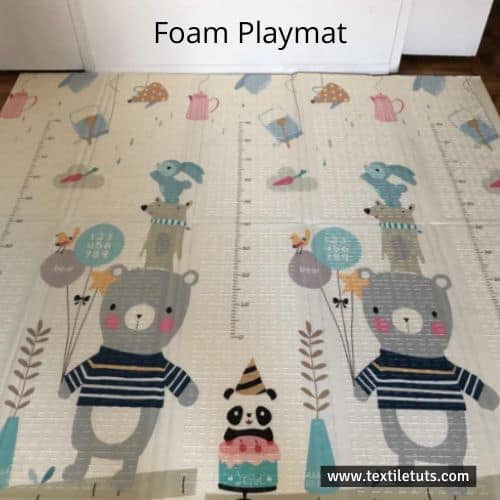
Foam playmats are made of soft, lightweight foam that is easy to clean and store. They are the most affordable type of playmat. Most foam playmats are manufactured from closed-cell polyethylene foam with a density of 30 kg/m³ to 45 kg/m³, which provides durability and water resistance. Foam playmats are comfortable for babies to crawl and play on.
Foam playmats typically weigh between 200 grams and 500 grams per tile, making them easy to handle during cleaning. The interlocking design allows for customizable configurations ranging from 4 tiles (approximately 0.3 m²) to 36 tiles (approximately 2.8 m²) of floor coverage.
Rubber Play Mats
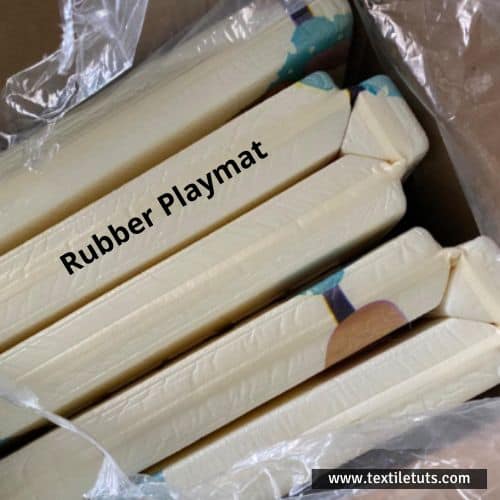
Rubber play mats are a popular option for flooring in nurseries and children’s rooms. They are soft, durable, and easy to clean. Natural rubber play mats offer superior grip on hard floors, with a coefficient of friction of 0.8 or higher when dry. However, you should take care when cleaning a rubber play mat, as some cleaners can damage the material.
Rubber play mats generally have a Shore hardness of 40A to 60A, which provides a balance of comfort and support. These mats typically last 3 to 5 years with proper care before showing significant wear.
Puzzle Play Mats
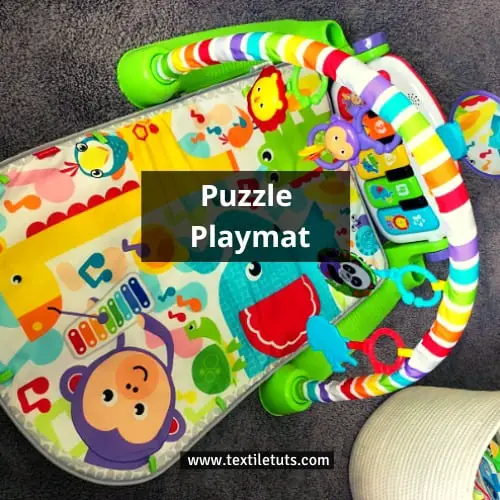
These playmats are designed for younger babies who are just starting to sit up. They have large puzzle pieces that measure approximately 30 cm × 30 cm (12 in × 12 in) each. You can find them in different colors and designs. Some parents use them as floor mats, while others put them on top of a table or other surface.
Puzzle play mats are typically made from EVA (ethylene-vinyl acetate) foam with a density of 100 kg/m³ to 120 kg/m³, providing enhanced cushioning compared to standard foam mats.
Fabric Play Mats
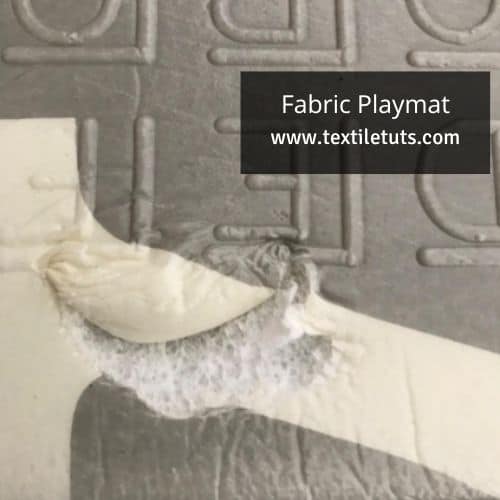
These are the most common type of playmat. They are usually made from soft cloth, like cotton, and have different designs printed on them. Some fabric playmats also have padding to make them more comfortable for your baby.
Fabric play mats typically use 100% cotton or a cotton-polyester blend (usually 80% cotton, 20% polyester) with a padding layer of polyester fiberfill ranging from 100 g/m² to 200 g/m². The outer fabric thread count generally ranges from 150 to 400 threads per square inch.
How to Wash Baby’s Play Mat
The majority of playmats can be machine-washed in cold water (15°C to 20°C or 59°F to 68°F) on the delicate cycle. For heavily soiled mats, warm water at 30°C to 40°C (86°F to 104°F) is acceptable for fabric play mats only. Here are the best methods to clean or freshen your baby play mats:
Machine Wash Method
Using a washing machine is the easiest and most effective way to clean your baby’s playmat, particularly for fabric and foam types that are machine-washable.
Steps:
- Remove any toys or other objects from the playmat.
- Vacuum the mat at 100 W to 500 W suction power to remove dirt, dust, and hair.
- Place the mat in the washing machine on the delicate cycle using cold water at 15°C to 20°C (59°F to 68°F).
- Add 15 ml to 30 ml (1 to 2 tablespoons) of mild, fragrance-free detergent.
- Wash according to the manufacturer’s instructions.
- Hang the mat to dry in a well-ventilated area, or machine dry on low heat at 40°C (104°F) maximum.
Baking Soda Method for Foam Mats
Baking soda is the most effective method for foam playmats because it naturally deodorizes while cleaning without damaging the foam structure.
Steps:
- Make a paste of 60 grams (4 tablespoons) of baking soda mixed with 250 ml (1 cup) of cold water.
- Apply the paste to the playmat with a sponge using circular motions.
- Let it sit for 15 to 20 minutes to allow the baking soda to penetrate and neutralize odors.
- Gently wipe it off with a damp cloth.
- Dry the playmat completely in a flat position for 2 to 4 hours before use.
Soapy Water Method for Fabric Mats
If your playmat is made of fabric, you should use a mixture of soap and water to clean it safely without damaging the material.
Steps:
- Remove any toys or other objects from the playmat before you begin.
- Wipe it down with a damp cloth to remove any loose dirt, dust, or hair.
- Fill a sink with 5 to 10 liters (1.3 to 2.6 gallons) of cold water at 15°C to 20°C (59°F to 68°F).
- Add 15 ml (1 tablespoon) of mild, baby-safe detergent.
- Wash the mat using a soft brush or sponge with gentle pressure.
- Rinse thoroughly with clean cold water until all soap residue is removed.
- Hang it to dry or air dry on a flat surface on the lowest dryer setting.
Vinegar Method for Rubber Mats
If your playmat is made of rubber, you should use a vinegar solution to clean it safely without degrading the rubber material.
Steps:
- Make a mixture of one part white distilled vinegar (5% acidity) and four parts cold water at 15°C to 20°C (59°F to 68°F).
- Use a sponge to apply the mixture to the playmat using light pressure.
- Allow the solution to sit for 5 to 10 minutes to break down residue.
- Rinse the playmat thoroughly with cold water.
- Repeat if necessary for heavily soiled areas.
- Dry completely with a clean towel before placing back on the floor.
Deep Cleaning and Sanitizing
For playmats used in daycare settings or by multiple children, deep cleaning with an EPA-registered disinfectant safe for baby items is recommended. Look for products with hydrogen peroxide (3% to 9%) as the active ingredient, which provides broad-spectrum disinfection without harmful residues.
Apply disinfectant to a clean surface, allow 5 to 10 minutes of contact time, then rinse thoroughly with cold water. Always verify the product is safe for use on children’s items by checking the manufacturer’s guidelines.
Maintenance Tips for Baby Mats
- Clean your baby’s playmat as soon as it gets dirty to prevent stains from setting in. Fresh stains respond to treatment within 2 to 4 hours; older stains may require 24 to 48 hours of soaking.
- Test any cleaning solution on a small, inconspicuous area of the mat first to verify it doesn’t damage the material or cause discoloration.
- Never use hot water above 40°C (104°F) or bleach (sodium hypochlorite) on your baby’s playmat, as these can degrade foam cells, damage rubber surfaces, and leave harmful residues.
- Most playmats can be machine-washed in cold water at 15°C to 20°C (59°F to 68°F) on a gentle cycle for up to 30 wash cycles before material degradation begins.
- Store foam and rubber mats flat or rolled; folding may cause permanent creasing that compromises the shock-absorbing properties.
- Replace playmats when you notice compression of foam (loss of thickness exceeding 20%), cracks in rubber, or persistent odors that remain after thorough cleaning.
Drying and Storage
Proper drying is essential to prevent mold and mildew growth, which can occur within 24 to 48 hours if a mat remains damp. Always dry mats in a well-ventilated area with relative humidity below 60%. For foam mats, air drying in a flat position for 4 to 6 hours ensures complete drying throughout the material.
Never use a hair dryer or direct sunlight on foam mats, as temperatures exceeding 40°C (104°F) can deform the foam cells. For rubber mats, direct sunlight exposure should be limited to 2 to 4 hours maximum to prevent surface cracking.
Summary
Washing your baby’s playmat regularly is essential for maintaining a hygienic play environment. The method you choose depends on the material: machine washing works best for fabric mats, baking soda is ideal for foam, soapy water suits fabric play mats, and vinegar is safe for rubber mats.
Always use cold water (15°C to 20°C / 59°F to 68°F), mild detergent, and avoid hot water and bleach. Test cleaning solutions on a small area first, and dry mats completely before use. With proper care, your baby’s playmat will provide a safe, clean surface for play and development.
References
- Centers for Disease Control and Prevention. (2023). How to Clean and Disinfect. CDC.
- U.S. Environmental Protection Agency. (2023). Selected EPA-Registered Disinfectants. EPA.


