
What Color to Dye Over Brown Fabric? Practical Overdye Guide

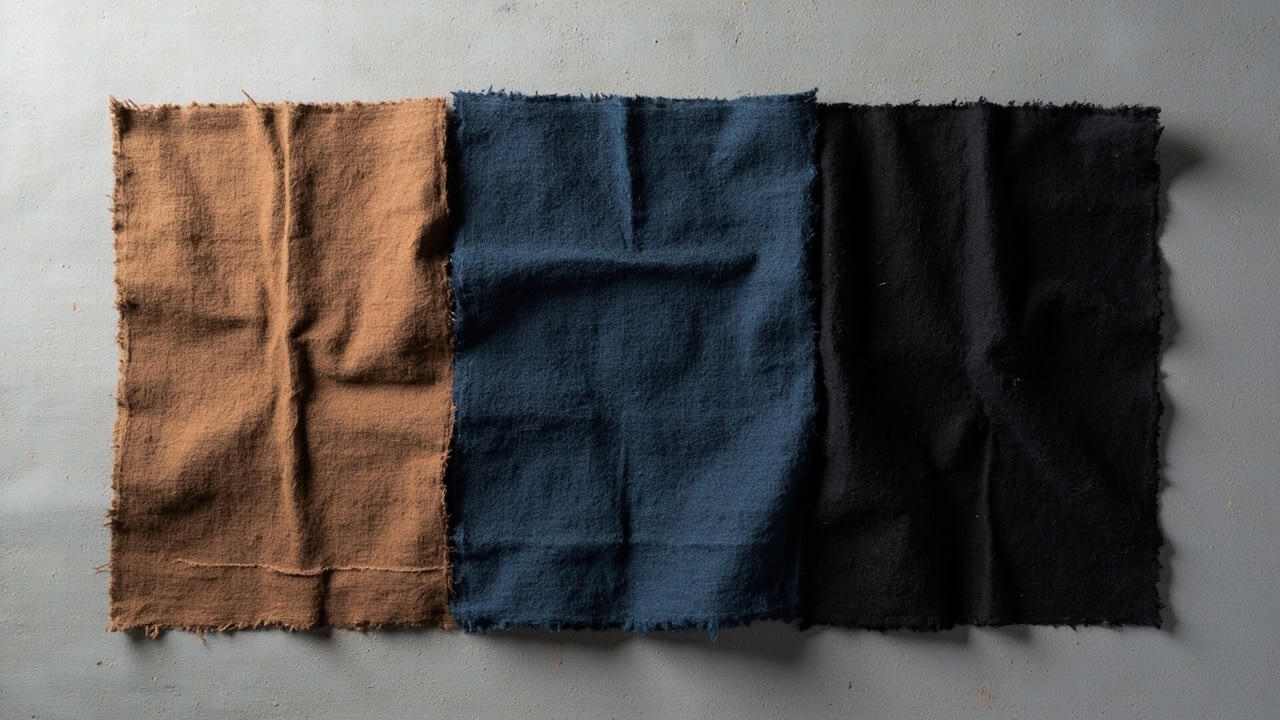
You can only successfully overdye brown fabric with colors darker than the existing brown — black, navy, dark burgundy, forest green, and chocolate brown all provide complete coverage. Lighter colors (pastels, yellows, reds, oranges) cannot mask brown because the original dye molecules remain visible beneath the new layer; fabric bleach or color remover must be used first to strip the brown before applying lighter overdye colors.
Why Brown Fabric Is Difficult to Overdye
Brown is one of the most stubborn base colors to overdye because it is not a primary pigment — it is a composite tone produced by mixing multiple dye molecules, typically a red base combined with green or yellow undertones. When these deep-penetrating dye compounds bond to natural fibers like cotton or wool, they create a coloration that resists being overwhelmed by a single new layer of dye.
Overdyeing works on a fundamental principle of color theory: darker colors absorb more light and block lighter tones from reflecting back through them. When you add a new dye layer on top of brown, the existing brown dye molecules continue to absorb and reflect wavelengths of light. Lighter colors — yellow, orange, pink, red, and white — lack the pigment density to absorb enough light to prevent the brown base from showing through. The result is a muddy, unexpected hue rather than the intended color.
This is an absolute rule of fabric overdyeing: you cannot lighten fabric by adding dye. Dye is a coloring agent — it adds pigment, it does not subtract it. To make brown fabric lighter, you must first remove the existing brown dye using a color remover or bleach, then apply the lighter dye in a second, separate process. Skipping this preparation step is the single most common reason overdyeing fails.
The fiber type also matters enormously. Natural fibers like cotton and linen have an open cell structure that absorbs dye deeply, making them more forgiving for dark overdyeing. Synthetic fibers like polyester require much higher temperatures and specialized disperse dyes to achieve comparable results. Understanding what your fabric is made from determines every other decision in the overdyeing process.
Colors That Work: Dark Overdyes on Brown Fabric
When selecting an overdye color for brown fabric, the guiding principle is simple: the new color must be darker than the existing brown. Beyond darkness, cool-toned dark colors tend to provide the cleanest visual contrast against warm brown undertones, while warm-toned dark colors offer richer, more harmonious transitions.
Full Coverage (Dark Colors)
- Black — provides the highest color shift and complete elimination of brown undertones. This is the most reliable overdye option across all fabric types. Black dye has the maximum pigment density needed to block brown from showing through.
- Navy Blue — offers near-complete coverage with cool contrast against warm brown undertones. Results are slightly less stark than black but still fully reliable on medium and dark browns. Lighter tan browns may show faint brownish edges on close inspection.
- Dark Burgundy — provides rich depth with warm-to-warm transition. Best suited for medium camel browns where the underlying red tones blend naturally with burgundy. Dark espresso browns may cause burgundy to read as a slightly muted wine color.
- Forest Green — works as an earthy complement to lighter browns (tan, camel, khaki). The natural affinity between green and brown undertones produces cohesive results. Less reliable on dark espresso or walnut browns where the contrast can produce a murky olive.
- Dark Chocolate Brown — produces a subtle but complete color shift that completely hides the previous brown. This is the choice when you want to change the depth and tone of the brown without making a dramatic statement. It provides full coverage but limited visual transformation.
Partial Coverage (Medium-Dark Colors)
- Deep Purple — can produce acceptable results on light-to-medium browns, but brown undertone may show in areas of heavy wear or on loosely woven fabric. Test a swatch before committing to full garment treatment.
- Teal — may show a brownish cast on medium-to-dark browns because teal’s green component competes with brown’s yellow-orange base. Results improve significantly on light tan and buff browns.
Colors That Will NOT Work on Brown Fabric
Attempting these colors on brown fabric without first removing the existing dye will produce disappointing, muddy results:
- White — requires bleach or a dedicated color remover (sodium hydrosulfite-based product) before any light dye application. Fabric damage risk is high, especially on natural fibers, if bleach concentration is not carefully controlled.
- Yellow or Gold — brown undertones show through immediately, producing an unpleasant khaki or olive result. The complementary relationship between yellow and brown in the color spectrum ensures the brown dominates.
- Orange — brown and orange share warm undertones, so the result is an unappealing, muddy brownish-orange rather than a true orange. The existing brown shifts the orange toward rust.
- Pink — brown shows through pink’s translucent pigment, creating a dull, dirty mauve. Even deep raspberry pinks appear muddied over brown bases.
- Red — brown shifts true red toward a brownish-rust or copper tone. The results are unpredictable and rarely match the intended shade.
- Light Blue — brown undertones interact with light blue’s cool tone to produce a grayish-green or muddy periwinkle. The color reads as contaminated rather than intentional.
Step-by-Step: Overdyeing Brown Fabric
The overdyeing process varies by fiber type, but the core sequence remains consistent. Follow these steps in order:
- Assess your brown. Light tan and buff browns are the easiest to overdye — they have less pigment density and fewer molecular bonds to compete with. Medium camel browns respond well to dark colors. Dark espresso and walnut browns require black for guaranteed complete coverage; navy may show faint brown edges.
- Choose the right dye for your fabric type. For cotton, linen, hemp, and rayon: use fiber reactive dyes (such as iDye, Rit All-Purpose Dye, or Dharma Trading Procion MX). For polyester, acetate, or acrylic: use disperse dyes (such as Rit DyeMore). For wool and silk: use acid dyes (such as iDye for Natural Fabrics or Rit All-Purpose Dye). Using the wrong dye chemistry for your fiber produces color that fades immediately after drying.
- Prepare the fabric. Wash fabric in hot water (at least 140°F) with detergent and no fabric softener. This removes fabric finishes, sizing agents, oils, and soil that coat the fibers and block dye penetration. Do not skip this step — residual finishes cause splotchy, uneven uptake.
- Calculate dye quantity. Use 1.5 times the normal dye quantity for dark overdyeing on brown fabric. The existing brown acts as a pigment base that partially cancels or dulls incoming color. Extra dye compensates for this interaction. For black overdye, doubling the quantity further improves complete coverage on dark browns.
- Prepare the dye bath. For cotton, linen, hemp: heat water to 180–200°F (82–93°C). Add fully dissolved dye, then add 1 cup of salt per pound of fabric to improve dye exhaustion. For wool and silk: heat to 185°F (85°C) maximum; add 1 cup of white vinegar per pound of fabric. For polyester: bring to a full boil (200–210°F / 93–99°C) in a stainless steel pot; add 1 teaspoon dish detergent.
- Add fabric and maintain temperature. Fully submerge the pre-wetted fabric. Keep cotton/linen in the bath for 30–60 minutes, stirring every 5 minutes for even distribution. Wool and silk require 30–45 minutes at 185°F with gentle stirring. Polyester must be kept at a rolling boil for at least 30 minutes; the first 10 minutes are the most critical — maintain slow, continuous agitation.
- Rinse and dry. Remove fabric from the bath and rinse in warm water, gradually reducing temperature until the rinse runs clear. Machine washing on a gentle cold cycle can expedite this process. Dry away from direct sunlight, which can cause uneven oxidation and lightening as the dye sets.
Common Overdyeing Mistakes and How to Fix Them
| Mistake | Result | Fix |
|---|---|---|
| Using too little dye | Uneven brown patches showing through the new color | Re-dye the entire garment in a fresh bath using double the original dye quantity |
| Insufficient water in dyebath | Concentrated dye marks and streaks | Use a larger container with enough water for fabric to move freely; the ratio should be at least 4 gallons of water per pound of fabric |
| Dye not fully dissolved | Spots, streaks, and speckled patterns on the fabric surface | Dissolve powder dye in a separate container of hot water before adding to the main bath; strain liquid dye through a fine mesh sieve |
| Wrong dye type for fiber | Color fades within days or washes out entirely | Match dye chemistry to fiber content: fiber reactive for cotton/linen, acid dye for wool/silk, disperse dye for polyester; no exceptions |
| Skipping wash prep | Splotchy, uneven dye uptake with patchy lighter areas | Always wash fabric in hot soapy water before dyeing; even new fabric may have sizing or finishing agents |
Fiber Compatibility for Overdyeing Brown
Natural Fibers (Cotton, Linen, Hemp)
Cotton, linen, and hemp are the most receptive fibers for overdyeing because their cellulosic structure absorbs dye deeply and bonds strongly with both fiber reactive and all-purpose dyes. Brown on cotton responds reliably to black, navy, and dark burgundy overdyeing. Light colors over brown on cotton require two full processes: first stripping the brown with color remover, then applying the new lighter dye. Multiple dye baths may be needed for pale shades on heavily dyed brown fabric.
For cotton overdyeing, use fiber reactive dyes at 180–200°F with the addition of soda ash (1 cup per gallon of water) to raise pH and promote dye bonding. If using Rit All-Purpose Dye on cotton, add 1 cup of salt per pound of fabric to increase dye exhaustion. The target metric is dye exhaustion — the percentage of dye that bonds to fabric versus remaining in the bath. Higher exhaustion produces deeper, more colorfast results.
Wool and Silk
Wool and silk accept acid dyes exceptionally well, producing vibrant, long-lasting colors. Brown wool overdyes cleanly to dark colors with minimal risk of the underlying brown showing through. Use gentle heat at 185°F maximum for wool to prevent shrinkage and felting — agitation should be slow and deliberate, never vigorous. Silk tolerates higher heat but responds best at 180–190°F.
For wool and silk overdyeing, add 1 cup of white vinegar per pound of fabric to the dyebath. Vinegar lowers the pH and creates the acidic environment acid dyes require for proper fiber bonding. Remove from heat and allow fabric to cool in the bath for 30 minutes before rinsing to maximize color depth and colorfastness.
Polyester
Polyester is the most challenging fiber for overdyeing because it requires disperse dyes and near-boiling temperatures (200–210°F) to achieve any meaningful color penetration. Polyester’s closed, oil-based molecular structure resists water-borne dye uptake at normal temperatures. Brown polyester is particularly difficult — only black, navy, and very dark chocolate brown provide reliable, consistent coverage.
Stovetop dyeing is mandatory for polyester — washing machines cannot achieve or maintain the 200°F+ temperatures needed. Use a large stainless steel pot, add 1 teaspoon of dish detergent to help wet the fibers, and maintain a slow simmer (not a rolling boil, which damages fabric) for at least 30 minutes. Double the dye quantity for polyester overdyeing. The dye exhaustion rate on polyester is inherently lower than on natural fibers, which is why polyester rarely achieves the depth of color possible on cotton.
Blends (Cotton-Polyester)
Cotton-polyester blends present the most unpredictable overdyeing results because each fiber type requires different dye chemistry and temperatures. The cotton portion may absorb dye at 180°F while the polyester requires 200°F+, creating a mismatch in color uptake. Only very dark colors (black, dark navy) can mask this inconsistency reliably.
Before treating any blend garment, create a test swatch using the same fabric from an inside seam. Apply the dye using your planned method and assess the result. If the swatch shows uneven color uptake, the full garment will likely follow the same pattern. For 65/35 cotton-polyester blends, Rit All-Purpose Dye may produce acceptable results using the stovetop method at just below boiling.
Frequently Asked Questions
Q: Can you dye brown fabric a lighter color?
A: No — overdyeing can only add color, not remove it. To make brown fabric lighter, you must first strip the existing dye using a color remover (sodium hydrosulfite) or bleach, then dye to the desired lighter shade. This process carries risk of fabric damage, especially to natural fibers.
Q: What is the best color to dye over brown fabric?
A: Black provides the most dramatic and reliable transformation — it completely masks brown undertones and creates a fresh start. Navy blue is the second most effective option, offering strong coverage with a more subtle shift. Both work on all fabric types that accept dye.
Q: Will overdyeing brown fabric damage the fabric?
A: Overdyeing with the correct dye type for your fabric is generally safe and does not damage fibers — it merely adds color molecules. However, fabric that has been previously dyed multiple times may be weakened. Always check fiber content and use the appropriate dye chemistry: fiber reactive dye for cotton, acid dye for wool/silk, disperse dye for polyester.
Q: How many coats of dye are needed to cover brown?
A: One standard dye bath provides full coverage when using black or another color darker than the existing brown. If the result shows brown patches or unevenness, a second bath with 1.5x dye quantity will correct it. Lighter-over-brown situations (if using color remover first) typically require two baths: one to strip brown, one to apply the new lighter color.
References
- Rit Dye. (2026). How to Dye Natural Fabrics. Rit Dye.
- Rit Dye. (2026). How to Use DyeMore for Synthetic Fibers. Rit Dye.
- Rit Dye. (2026). How to Use Rit Color Remover. Rit Dye.
- Rit Dye. (2026). How to Get as Dark a Color as Possible. Rit Dye.
- American Association of Textile Chemists and Colorists. (AATCC). AATCC Test Method 61 — Colorfastness to Laundering: Home and Commercial. AATCC.
- International Organization for Standardization. (ISO). ISO 105-C06 — Textiles — Tests for colour fastness — Part C06: Colour fastness to domestic and commercial laundering. ISO.


