
What Color to Dye Over Red Fabric? Color Theory for Overdyeing

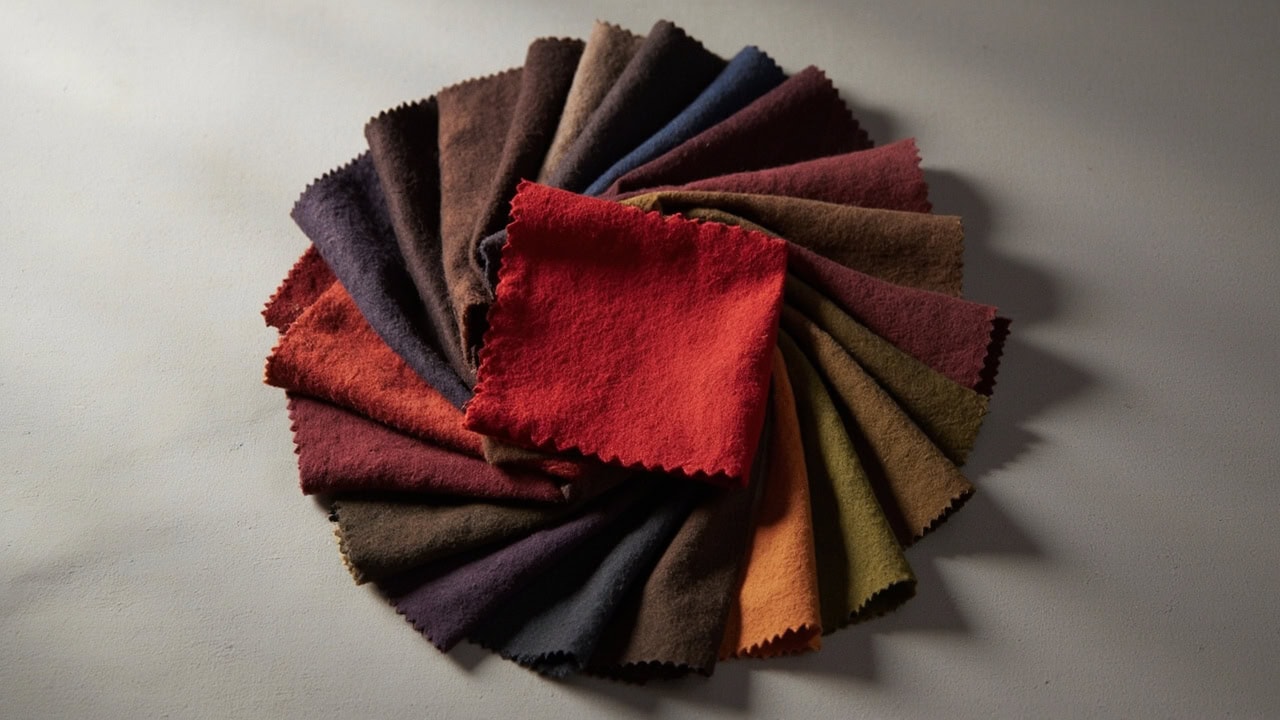
The only reliable colors to dye over red fabric are dark shades — navy blue, black, espresso brown, or deep forest green — because dye is translucent and the original red color shows through lighter overdye applications. To achieve lighter or brighter colors, you must first remove the existing red dye using a color remover or bleach bath before overdyeing.
Dyeing over red fabric is one of the most common frustrations in textile dyeing, and the reason comes down to how dye actually works on a molecular level. Unlike paint, which sits on the surface of fabric as an opaque coating, fabric dye penetrates individual fibers and stains them from within. This translucency means the original color is never fully obscured — it becomes an undertone that influences every subsequent layer of color. Understanding this principle is essential before attempting any overdye project on red fabric.
Why Red Fabric Is Difficult to Overdye
All fabric dye is translucent, not opaque. When you apply dye to fabric, the dye molecules bond chemically or mechanically with individual fibers rather than forming a surface film. This is why the original color remains visible as an undertone beneath any new dye application — the new dye adds color to the fiber but cannot replace or erase what is already there.
Red is particularly problematic because it is one of the most saturated, high-chroma colors available in standard dye palettes. When you apply a lighter dye over red — such as yellow, pink, or white — the new dye dilutes the existing red rather than replacing it. The result is a muddy brownish-orange tone, because you are effectively mixing the new pigment with the dominant red undertone. This is a direct consequence of subtractive color mixing: the more pigment present, the less likely a lighter color can establish its own identity.
Lighter dye colors have less pigment concentration by design — they are formulated to produce pale, delicate shades on white or lightly colored fabric. When applied over red, there simply is not enough new pigment to create a meaningful visual change. The red shows through completely, and in many cases the mixture of red with lighter pigments produces an unattractive brown or orange-brown result that is worse than the original color.
The solution is binary: either remove the red first, or choose a dark enough color to overwhelm the red undertone entirely. There is no middle ground where a medium-toned dye will produce a clean, predictable result over red fabric.
Colors That Work: Dark Overdyes on Red Fabric
When you accept the fundamental constraint of dye translucency, the path forward becomes clear: you need a color with enough pigment concentration to drown out the red undertone. Dark colors — particularly black, navy blue, espresso brown, and deep forest green — have the pigment density required to produce clean, wearable results on red fabric.
Navy Blue Over Red
Navy blue is a popular choice for overdyeing red fabric, but it is important to understand what the result will actually look like. Navy and red are not complementary colors in the way that allows for clean mixing — instead, they produce a deep purple or burgundy tone as the two colors blend in the fiber. This is not a failure of the technique; it is an expected consequence of subtractive color mixing at high saturation.
Navy blue overdye works best on medium-weight natural fibers, particularly cotton and linen, where the dye can penetrate evenly and bond thoroughly with the fiber. Multiple applications may be needed to achieve even coverage, especially on fabric that has been previously washed many times and may have uneven dye absorption. Polyester blends present additional challenges, as discussed in the fiber type section below.
Black Over Red
Black is the most reliable overdye option for red fabric. Its extremely high pigment concentration — among the highest of any standard dye color — allows it to mask the red undertone effectively across nearly all fiber types. When you dye red fabric black, the result typically appears as a dark brownish-black on many fibers, or a true black on cotton and linen that has been properly prepared.
The key to achieving a true black rather than a brownish-black lies in fiber preparation and dye fixation. Cotton and linen respond best to black reactive dyes applied at proper temperatures (typically 140–160°F / 60–71°C for reactive black dyes). Synthetic fibers and synthetic blends may not accept black dye evenly, which is why testing on a fabric swatch before treating an entire garment is always recommended. For detailed guidance on black dye application across different fiber types, refer to our complete guide to dyeing fabric black.
Deep Brown / Espresso Over Red
Deep brown — often marketed as espresso, chocolate, or dark walnut — is one of the most natural-feeling choices for overdyeing red fabric. Because red and brown share warm undertones, they blend without creating the jarring color conflicts that navy or green can produce. The result is a rich, warm dark brown that feels intentional rather than like a compromise.
The warm-to-warm color relationship means that even if the red undertone shows slightly, it contributes to the richness of the brown rather than creating a muddy gray or purple cast. This makes espresso brown one of the most forgiving overdye colors for red fabric, particularly for projects where a deep, earthy palette is desirable.
Dark Green (Forest or Olive) Over Red
Dark forest green and olive are interesting cases in color theory. Red and green are complementary colors — they sit opposite each other on the color wheel — which means they should theoretically cancel each other out. In practice with fabric dye, the result is a dark, muted olive-brown or brownish-green, not the clean olive you might expect from digital color mixing.
If your goal is a muted, earthy green-brown tone, dark green can work successfully on red fabric. However, if you are hoping for a true green result, you will be disappointed. The red undertone is too dominant in the subtractive mixing model used by fabric dyes, and the result will always skew toward brown. Accept the green-over-red result as a muted olive-brown and style your project accordingly.
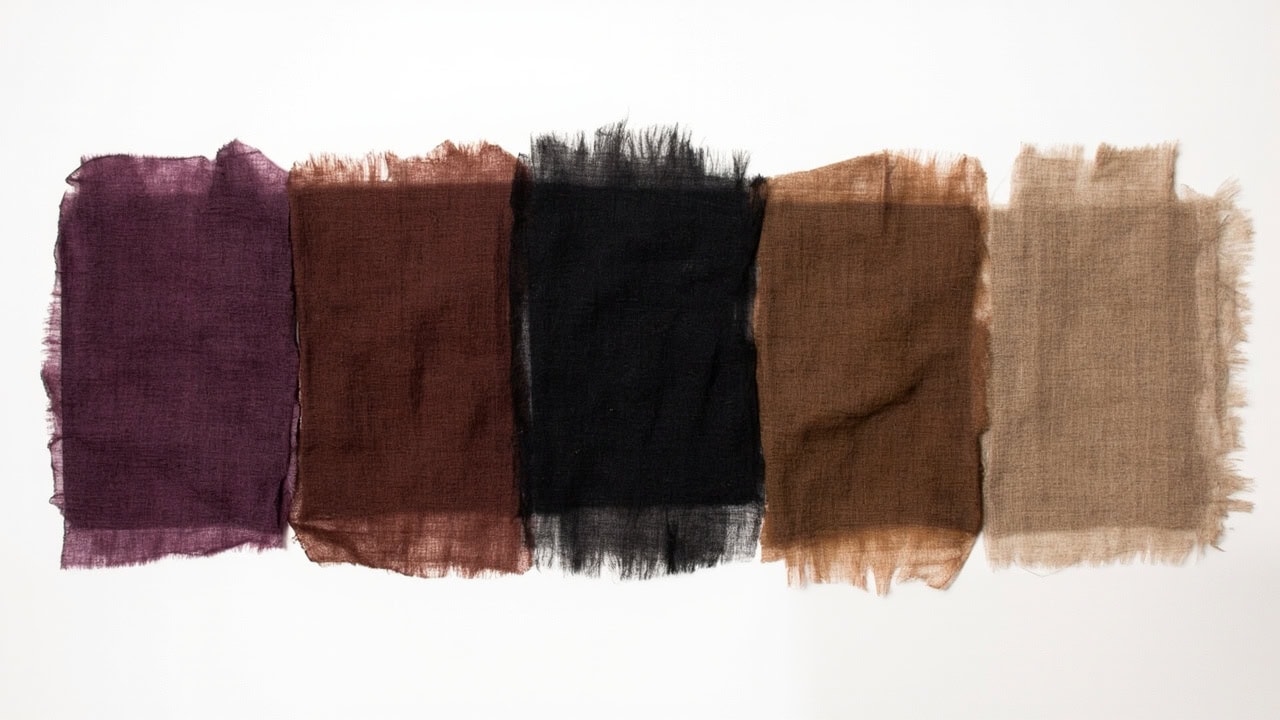
Colors That Will Not Work on Red Fabric
Understanding which colors fail on red fabric is as important as knowing which ones succeed. The following colors produce consistently poor results because their pigment concentration is insufficient to mask the red undertone, and in many cases the mixing produces muddy, unattractive secondary tones.
| Color | Result on Red | Why It Fails |
|---|---|---|
| White | Yellow-orange or brown | Red minus red leaves yellow/orange undertone; no white pigment exists in standard dyes to counteract this |
| Yellow | Orange or coral | Red and yellow are adjacent on the color wheel; they reinforce each other to produce orange rather than a distinct yellow |
| Light Blue | Green or teal | Red and blue pigments mix to create brown in fabric dye; light blue lacks the concentration to mask red, resulting in muddy tones |
| Pink | Coral or salmon | Red plus white dilution produces pink-red; there is no way to lighten a saturated red with additional pink pigment |
| Orange | Red-orange (no meaningful change) | Adjacent colors on the wheel reinforce each other; orange over red simply deepens the existing red rather than changing it |
| Purple | Brownish-purple | Red and blue can theoretically produce purple, but the red undertone dominates, creating a muddy brown-purple instead of a clean violet |
It is worth emphasizing that “light colors” as a category are essentially impossible to achieve on red fabric without first removing the existing dye. This is not a limitation of technique or product quality — it is a fundamental property of how fabric dye interacts with previously dyed fibers. No professional dyer or textile chemist can reliably produce a light pastel color over saturated red without a color removal step first.
How to Successfully Dye Lighter Colors Over Red
Achieving light, bright, or pastel colors on red fabric requires a mandatory first step: removing the existing red dye. Once the red is eliminated from the fiber, any lighter color becomes achievable, because you are working from a neutral or white base rather than fighting against a dominant color undertone.
- Remove the red dye first using a commercial color remover. Products like Rit Color Remover contain sodium hydrosulfite (Na₂S₂O₄), which acts as a reducing agent that breaks dye molecules into water-soluble fragments. These fragments then rinse away from the fiber, effectively bleaching the fabric without degrading the underlying textile structure. Follow the product instructions precisely — typically 1 packet per pound of fabric, dissolved in hot water (140–160°F / 60–71°C), with 20–30 minutes of soaking time followed by thorough rinsing.
- Bleach bath for stubborn red tones when targeting white or cream colors. A bleach bath uses diluted chlorine bleach (sodium hypochlorite) to further lighten fabric after color removal. The standard dilution is 1 part household chlorine bleach to 10–40 parts cool water, depending on the strength desired. Submerge the fabric for 2–5 minutes, checking continuously, then rinse thoroughly and neutralize with a hydrogen peroxide solution (1 part hydrogen peroxide to 10 parts water) to stop the bleaching action. For comprehensive guidance on this technique, see our guide to how to bleach white fabrics.
- Multiple treatments may be necessary for complete red extraction. Saturated reds — particularly those from synthetic dyes used in modern manufacturing — can be remarkably persistent. A second or even third round of color remover may be required, with drying and assessment between each treatment. Patience here is essential: rushing to the dye step before the red is fully removed will produce disappointing results.
- Test first on a small fabric sample before treating the entire garment. Cut a 2–3 inch swatch from a seam allowance or hem edge and run it through the full removal process. This validates that the fabric will lighten satisfactorily and reveals any fiber damage or unexpected reactions before you commit to processing the entire piece.
- Re-dye after removal — once the red is confirmed gone and the fabric is thoroughly rinsed and dried, any lighter color becomes achievable. The fabric is now a blank canvas, and standard dyeing procedures for the target fiber type apply. For guidance on what colors work on specific fibers after dye removal, see our article on what colors you can dye cotton.
Fiber Type Considerations for Overdyeing
Not all fabrics respond identically to overdye treatments. The fiber composition of your fabric determines which dye chemistry is required, what temperatures are appropriate, and how predictably the overdye will take. Understanding fiber types is essential for achieving professional-quality results.
Cotton and Linen (Natural Cellulosic Fibers)
Cotton and linen are the most receptive fibers for overdyeing because their porous, absorbent structure allows dye to penetrate deeply and bond effectively. Reactive dyes — the gold standard for cellulosic fibers — form a covalent bond with the cellulose分子, producing color that is highly washfast and colorfast. Overdye results on cotton and linen are typically even and predictable when proper dye chemistry and temperatures are used.
For dark overdye colors on cotton and linen, use reactive dyes at temperatures of 140–160°F (60–71°C). For color removal, sodium hydrosulfite-based color removers work effectively at similar temperature ranges. The higher the cotton quality and the more uniform the weave, the more even the overdye result will be.
Polyester (Synthetic Fiber)
Polyester requires disperse dyes and high heat — typically 200–266°F (93–130°C) under pressure — to achieve acceptable color uptake. Unlike reactive dyes on cotton, disperse dyes on polyester do not form covalent bonds; instead, the dye molecules are dispersed in the fiber under heat and gradually settle within the polymer matrix as the fabric cools. This makes overdyeing polyester significantly more challenging and more unpredictable than overdyeing natural fibers.
Overdye results on red polyester are the least reliable of all fiber types. The high heat required for disperse dye uptake can also affect the existing red dye, potentially causing it to migrate or shift in unexpected ways. Additionally, many red polyester fabrics are dyed with anthraquinone-based dyes that are notoriously resistant to color removal. If you are working with a red polyester blend, testing on a swatch is non-negotiable before attempting any overdye on the full garment.
Wool and Silk (Protein Fibers)
Wool and silk are protein fibers that require acid dye formulations rather than the reactive dyes used on cotton or the disperse dyes used on polyester. Acid dyes are applied in an acidic bath (typically pH 4–6, adjusted with acetic or formic acid) at temperatures near boiling for wool or at 180–212°F (82–100°C) for silk. The dye molecules bond with the protein structure through hydrogen bonding and ionic attraction.
Overdyeing red wool or silk is feasible with dark acid dye colors, though the results can be less predictable than on cotton due to the inherent variation in protein fiber structure. Color removers based on sodium hydrosulfite are generally effective on protein fibers, though the milder reducing agents used in some commercial color removers may require extended treatment times. Always test on a swatch before treating the full garment, as protein fibers can be more sensitive to the harsh conditions of color removal than cellulose fibers.
Fabric Blends
Fabric blends — such as cotton-polyester, rayon-polyester, or wool-acrylic — present the most complex overdyeing challenges because different fiber types require different dye chemistries and typically accept color at different rates. The dominant fiber in the blend determines which dye class will have the most influence on the final result, but the minority fiber may remain its original color or take the dye unevenly.
For any blend containing more than 20–30% polyester, achieving a clean, even dark overdye over red is extremely difficult without first removing the existing color. The polyester component will not respond to the dye chemistry that works on the natural fiber component, and its red tone will continue to influence the final result. A color removal step followed by a blend-specific dye formulation is the only reliable approach for red blend fabrics.
Frequently Asked Questions
Q: Can you dye over red fabric to make it lighter?
A: No — fabric dye cannot lighten fabric, only add color. Red fabric can only become a darker color through overdyeing, or the red must be removed first using a color remover or bleach bath before applying lighter dyes.
Q: Will black dye cover red fabric completely?
A: Black dye is the most effective at covering red fabric because its high pigment concentration overwhelms the red undertone. The result may lean slightly brownish-black on some fibers, but it will appear essentially black to the eye.
Q: What happens if I dye red fabric light blue?
A: Light blue over red fabric typically produces a muddy green, teal, or brownish color because the translucent light blue cannot mask the red undertone. Red and blue pigments mix to create brown in fabric dye, not the bright blue you might expect.
Q: How do I remove red dye from fabric before overdyeing?
A: Use a commercial color remover like Rit Color Remover or sodium hydrosulfite-basedReducers, which break down the dye molecules and make them water-soluble. For stubborn red tones, a mild bleach solution (diluted chlorine bleach) can further lighten the fabric after color removal.
References
- PSYKo. (2024). What Color to Dye Over Red Fabric? Color Theory for Overdyeing. TextileTuts.
- Rit Dye. (2024). Rit Dye — Fabric Dyeing Instructions. Rit.
- American Association of Textile Chemists and Colorists (AATCC). (2024). Technical Standards for Textile Dyeing and Colorfastness Testing. AATCC.
- CottonWorks. (2024). Fabric Dyeing Technology and Fiber-Specific Dye Selection. Cotton Incorporated.
- Textile Exchange. (2024). Sustainable Dyeing Practices and Standards. Textile Exchange.


