
How Long Does Tailoring Take? Timeline by Alteration

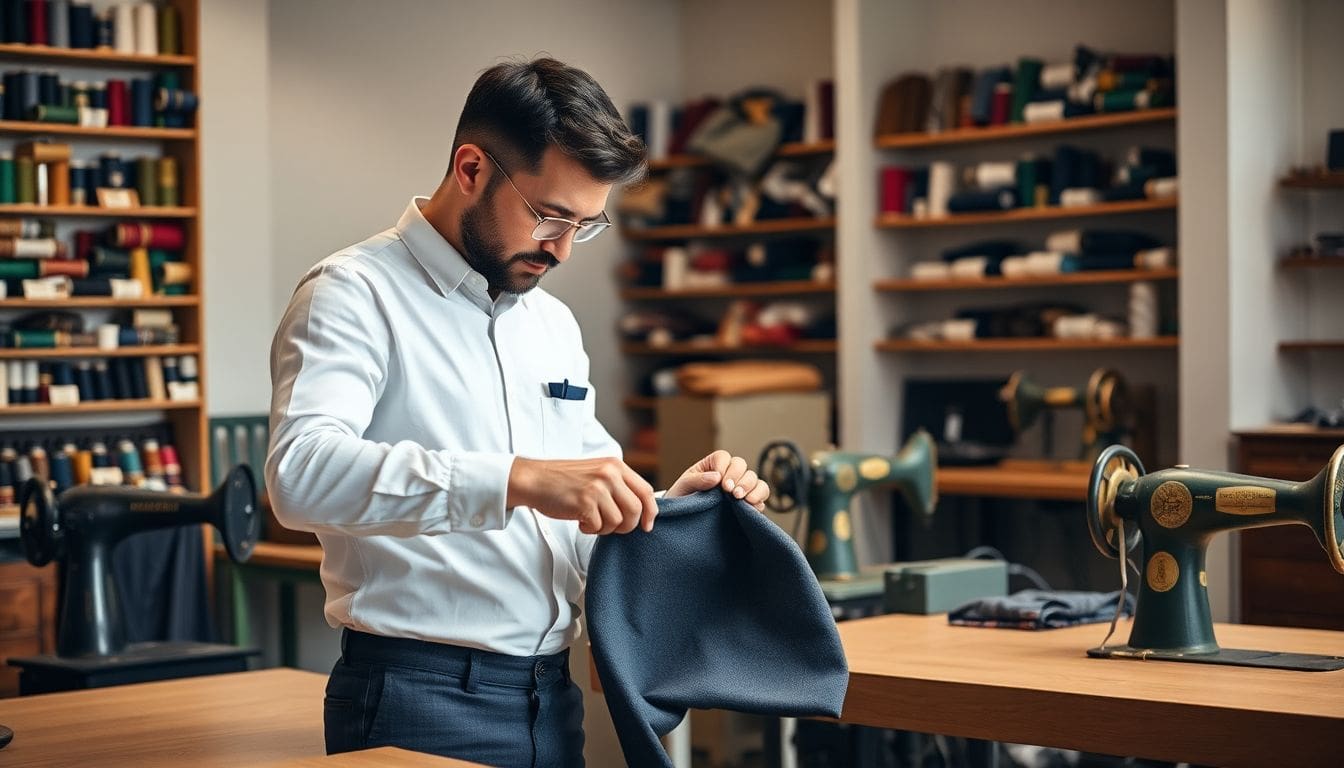
Tailoring timelines range from 1 business day for simple hemming to 4 weeks for full restructure alterations. The specific duration depends on the alteration type, garment construction, and tailor availability. Simple alterations like hemming or waistband adjustments take 1–3 days. Complex work like sleeve restructuring or garment resizing requires 2–4 weeks.
Why Tailoring Time Varies by Alteration Type
A master tailor creates a bespoke suit from scratch in approximately 40 hours, with roughly 75% of that stitching done by hand (Wikipedia, Tailoring). The time required for any given alteration follows the same logic: the more structural work a garment demands, the longer it takes. Alteration complexity is the primary driver of timeline.
Simple alterations — hemming and waistband adjustments — require minimal disassembly. The tailor works from the original construction with minimal disturbance to the garment’s structure. Complex alterations like sleeve restructuring or side seam adjustments require seam disassembly, pattern modifications, and careful reassembly with proper pressing between every step. The construction complexity directly determines the timeline: simple work takes days, complex work takes weeks.
Tailor workload and seasonality heavily influence turnaround. Wedding season (March–May) and holiday event season (September–November) push professional tailors to capacity. During these peak periods, even simple 1–3 day jobs extend to 5 business days due to queue volume. Planning ahead by 2–3 weeks during peak season prevents timeline disappointments.
Fabric type impacts construction time significantly. Delicate fabrics — silk, wool, and beaded items — require more hand-finishing, lower machine speeds, and greater care at every stage. A wool trouser hem requires the same structural steps as a cotton hem, but wool finishing demands 30–40% more hand-pressing time to achieve proper drape without shine.
Tailoring Timeline by Alteration Type
| Alteration Type | Typical Timeline | Complexity Level |
|---|---|---|
| Hemming (pants/skirts) | 1–3 business days | Simple |
| Waistband adjustment | 1–3 business days | Simple |
| Taking in/out (side seams) | 2–5 business days | Moderate |
| Sleeve shortening | 3–7 business days | Moderate |
| Lining replacement | 5–10 business days | Complex |
| Sleeve restructuring | 2–3 weeks | Complex |
| Full waist reduction | 2–4 weeks | Complex |
| Restructure/resizing | 3–4 weeks | Most Complex |
Simple Alterations: 1–3 Business Days
Simple alterations require no garment disassembly. The tailor works from the outside in, adjusting what already exists without unpicking a single seam. This category includes hemming, waistband adjustments, and minor letting out — work that preserves the original construction integrity.
Hemming (pants, skirts, dresses): Shortening or lengthening by folding and re-stitching the original hem. For trousers, the process involves measuring against the shoe line, cutting excess fabric, folding the new hem, and stitching. Standard fabric hemming takes 1–3 business days. Dresses and skirts follow the same logic but require 15–20% more handling time when original hems are curved rather than straight.
Waistband adjustment: Taking in or letting out the waistband by adjusting the back seam. This alteration addresses waist circumference changes after weight fluctuations or fits vintage trousers with non-standard waist measurements. The work stays contained to one seam area and does not affect the garment’s overall structure. Waistband adjustments take 1–3 business days for standard fabrics.
Minor letting out: Small adjustments up to 2.5 cm (1 inch) on side seams. The tailor unpicks the original stitching, releases the seam allowance, and re-stitches. This alteration works when fabric has sufficient seam allowance remaining. Jeans frequently need this adjustment after washing-induced shrinkage in the waist — a common issue with pre-washed denim. Minor letting out takes 1–3 business days.
Moderate Alterations: 3–7 Business Days
Moderate alterations require partial disassembly. The garment separates at key seams, the tailor makes precise adjustments, then reassembles and presses every junction. Poorly executed moderate alterations produce visible puckering on seams and uneven darts — precision at every step determines quality.
Sleeve shortening: The sleeve separates from the armhole, cuts to the shorter length (preserving the original cuff if present), and reattaches with the sleeve cap reshaped to maintain its rounded silhouette. A sleeve 1.25 cm too short appears noticeably awkward. Precision matters at every millimeter throughout this process. This alteration requires 3–7 business days, with 85% of that time devoted to the sleeve cap reshaping that preserves natural arm rotation.
Side seam adjustments: Taking in or letting out both sides of a garment simultaneously requires re-stitching and pressing at each seam junction. For lined garments, the lining must also adjust to match — adding 2–3 days to the timeline. This alteration addresses fit issues through the hips, one of the most common fitting problems in ready-to-wear clothing. Side seam adjustments take 2–5 business days for unlined garments and 4–7 business days for lined garments.
Dart adjustments: Adding or removing darts improves fit at the bust, waist, or back. Darts create the 3D shaping that makes flat fabric follow a curved body. A skilled tailor reads the hang of the garment on the body to determine exact dart placement and depth — this interpretive skill separates a good alteration from an average one. Dart adjustments take 3–5 business days.
Complex Alterations: 1–4 Weeks
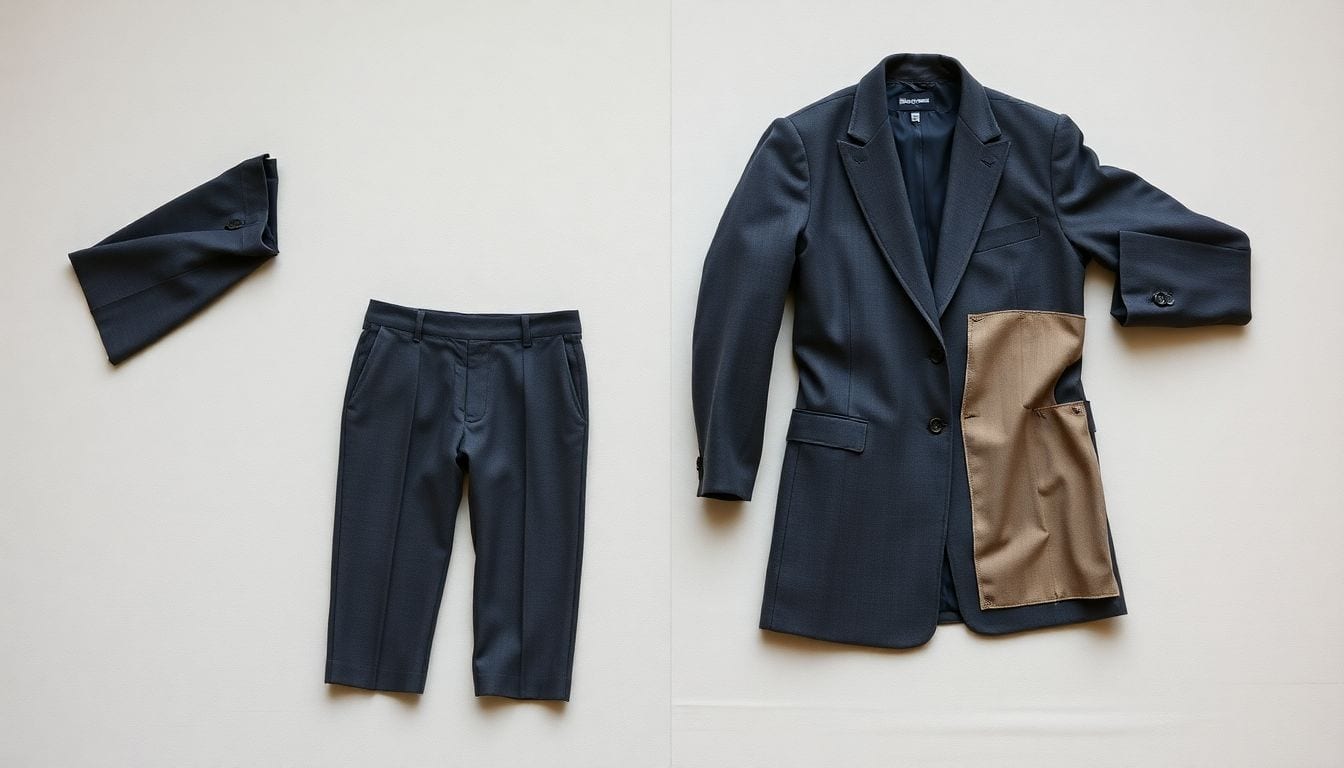
Complex alterations require complete garment disassembly and reconstruction. The tailor unpicks the entire garment to its component panels, modifies the underlying pattern, and rebuilds from scratch. This represents tailoring at its most demanding — bespoke-level work performed on an existing garment rather than one made from scratch.
Lining replacement: The old lining must remove carefully without damaging the shell fabric, the new lining cut to match the garment’s interior exactly, and hand-finished into place. Interfacing components exposed during this process may need replacement. Lining replacement requires 5–10 business days, with 60% of that time spent on hand-finishing the lining-to-shell attachment that prevents visible interior bulk.
Sleeve restructuring: Changing sleeve style — such as converting a full-length sleeve to three-quarter, or significantly altering the armhole — requires sleeve modification plus shoulder seam and interfacing work. The tailor must preserve the sleeve cap shape that allows natural arm rotation while achieving the new aesthetic. This alteration takes 2–3 weeks because it involves complete armhole reconstruction, not merely sleeve shortening.
Full waist reduction: Multiple seams adjust simultaneously — side seams, back seams, and the waistband all rebuild to the new measurement. Lined garments require lining adjustment to match. A full waist reduction on a lined jacket or dress requires 2–4 weeks due to the volume of interconnected seam work that must maintain structural alignment throughout the reconstruction.
Restructure work: Fundamental changes to a garment’s silhouette or fit — converting a blazer to a shorter jacket, letting out a dress through multiple panels, or redesigning how a garment sits on the body. This category represents the most time-intensive tailoring work. Timelines of 3–4 weeks reflect the complete reconstruction involved, including pattern modification, component panel adjustments, and multiple fitting assessments during reassembly.
Factors That Affect Your Tailor’s Timeline
Beyond alteration complexity, external factors determine whether your tailor delivers on time or needs extra days. Understanding these factors helps you plan accurately and avoid last-minute surprises.
Season: Tailors experience highest demand during wedding and prom season (March–May) and holiday event season (September–November). During these windows, straightforward 1–3 day jobs require 5 business days due to queue pressure. If your alteration ties to a specific event, schedule 2–3 weeks earlier than you otherwise would — this buffer accounts for both queue time and any unexpected discoveries once work begins.
Rush fees: Professional tailors offer 24–48 hour rush service for simple alterations at a 50–100% additional charge on top of the base alteration cost. Complex alterations cannot rush safely — construction quality suffers when skilled hand work compresses beyond its natural timeline. A sleeve restructuring that normally requires 2–3 weeks cannot complete in 3 days without compromising sleeve cap function.
Garment construction: Machine-stitched garments from standard manufacturers alter faster because seam allowances are consistent and predictable. Hand-finished or bespoke-quality pieces require more care at every disassembly point — hand-stitching takes 3–4 times longer to unpick cleanly compared to machine stitching without marking fabric.
Fabric sensitivity: Delicate fabrics — silk, wool, cashmere, and beaded or embroidered items — require slower handling, reduced machine tensions, and hand-finishing instead of machine stitching. This applies throughout construction, not only at the alteration site. A wool blazer take-in requires 40–60% more time than the same alteration on cotton twill.
Availability of matching notions: Alterations requiring matching thread, replacement zippers in the exact same size and color, or replacement buttons from the original set may face sourcing delays. For vintage or discontinued garments, notion sourcing alone adds 2–3 days to the timeline. Confirm notion availability before committing to the alteration timeline.
How to Plan Ahead for Tailoring
The single biggest mistake people make with tailoring is leaving it too late. A well-run tailor shop consistently underestimates turnaround by 1–2 days — not from dishonesty, but because they cannot predict exactly how every job will proceed until they examine the garment internally.
Always build buffer time into your plans. If the tailor says 3 days, plan for 5. If they say 2 weeks, plan for 3. This buffer absorbs queue time during peak seasons, unexpected discoveries once the garment opens up, and pressing or finishing time at the end of the process.
Bring your garment to the tailor before the event, not the day before. Seasonal surges create predictable patterns of customers arriving the week before weddings and holidays expecting rushed service. Professional tailors decline rush work they cannot complete safely — and those who accept every request are the ones to avoid.
Ask about rush fees before committing. Reputable tailors maintain clear written fee structures for rush service. Hesitation or vagueness about rush pricing signals a red flag about business practices — professional operations communicate pricing transparently.
Confirm the pickup date in writing. Verbal promises become unreliable during busy seasons — staff turnover, communication gaps, and simple forgetfulness erode verbal commitments. A written receipt listing the alteration description, agreed price, and promised date protects both parties and creates accountability throughout the process.
Professional tailors provide written receipts with agreed timelines as standard business practice. Any tailor unwilling to provide written confirmation of work terms is not worth trusting with quality garments — this transparency signals professional operation and accountability.
What to Ask Your Tailor Before Committing
A short conversation before handing over your garment prevents most timeline disappointments. Ask these specific questions to assess workload, expertise, and communication quality.
- “What is your current workload and can you meet my deadline?” — This reveals whether your job batches with ten others or receives individual attention.
- “Have you worked on this type of garment before?” — A tailor experienced with wool blazers produces better results on wool blazers than one who primarily alters cotton trousers.
- “What could cause delays in my alteration?” — Professional tailors proactively mention fabric issues, pattern matching challenges, or notion availability problems before you commit.
- “Is there a rush fee if I need it sooner?” — Confirm rush fee structure in writing, not just verbally, before committing to the timeline.
- “Do you charge extra if the job takes longer than estimated?” — Some tailors build in overrun allowances that pass unexpected costs to customers. Understanding this policy prevents surprises on the final bill.
Frequently Asked Questions
How long does it take to hem a pair of pants?
Pant hemming takes 1–3 business days at most tailors. The process involves measuring the desired length, cutting the excess fabric, folding the new hem, and stitching it. This alteration represents a same-day or next-day service for standard fabrics like cotton or wool trousers.
Can tailoring be done in 24 hours?
Simple alterations (hemming, waistband adjustments) are available within 24–48 hours at most tailors, typically with a 50–100% rush fee added to the base cost. Complex alterations such as sleeve restructuring or full waist reduction cannot complete in 24 hours without compromising construction quality.
Why do complex alterations take 2–4 weeks?
Complex alterations like sleeve restructuring or full waist reduction require complete garment disassembly, pattern adjustments, and careful reassembly with proper pressing between steps. Each construction stage requires drying or setting time, and skilled tailors batch similar work together to optimize their workflow.
What is the fastest tailoring service available?
Simple hemming and waistband adjustments are the fastest tailoring services, available as same-day or 24-hour rush jobs. Always confirm rush availability and fees before assuming rush service exists — capacity varies by tailor and season.
References
- Wikipedia. (n.d.). Tailoring. https://en.wikipedia.org/wiki/Tailoring
- TextileTuts. (n.d.). Complete Guide to Clothing Alterations: DIY and Professional Options. https://textiletuts.com/clothing-alterations-guide/
- TextileTuts. (n.d.). How to Hem Pants at Home: No-Sew and Sewing Methods. https://textiletuts.com/how-to-hem-pants/
- TextileTuts. (n.d.). Textile Glossary. https://textiletuts.com/textile-glossary/


