
Biomimetics in Textiles: A Deeper Look

Biomimetics in textiles is the application of nature’s mechanisms, structures, and processes to develop high-performance fabrics and fibers. By studying biological systems — from the water-repellent surface of lotus leaves to the adhesive feet of geckos — textile engineers have created self-cleaning, ultra-strong, adaptive, and even luminescent materials that outperform conventional textiles in remarkable ways.
The term biomimetics derives from the Greek word biomimesis and was coined by Otto H. Schmitt in 1957 during doctoral research into a device that mimicked the electrical action of a nerve. Alternative terms include bionics, biomimicry, and biognosis. The word appeared in Webster’s dictionary in 1974, defined as “the study of the formation, structure or function of biologically produced substances and materials… especially for the purpose of synthesizing similar products by artificial mechanisms which mimic natural ones.”
Nature has always been textile engineers’ greatest teacher: the lotus leaf inspired water-repellent fabrics, spider silk drove the design of tear-resistant materials, shark skin informed low-drag swimsuits, and the burdock plant gave rise to Velcro. These breakthroughs continue to push the boundaries of what fabrics can do.
Understanding Supersonic Speed
Plants offer ideas for imitation and have evolved in various ways, with some producing uncommon solutions to their special needs. Beyond their familiar characteristics, some plants exhibit actuation capabilities normally expected from biological creatures.
These plants include mimosa and sensitive fern (Onoclea sensibilis) that bend their leaves when touched (see Figure 2).
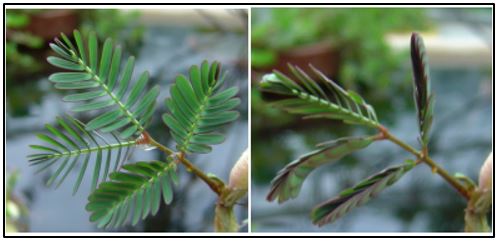
Figure 2: The sensitive fern has its leaves open (left) until they are touched (right)
Bug-eating plants have a leaf-derived trap that closes the ‘door,’ locking unsuspecting bugs that enter the cage and become prey (see Figure 3).
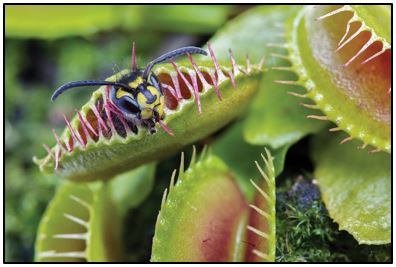
Figure 3: Bug Eating Plant (Venus flytrap)
The Venus flytrap (Dionaea muscipula) closes its trap in 100–300 milliseconds using snap buckling mechanics. The trap can re-trigger twice within 20 seconds [1].
The sunflower tracks the sun’s direction throughout the day to maximize exposure to light. This heliotropic behavior increases photosynthetic efficiency by up to 40% compared to fixed-orientation plants [1].

Figure 4: Sunflower tracking the sun’s direction
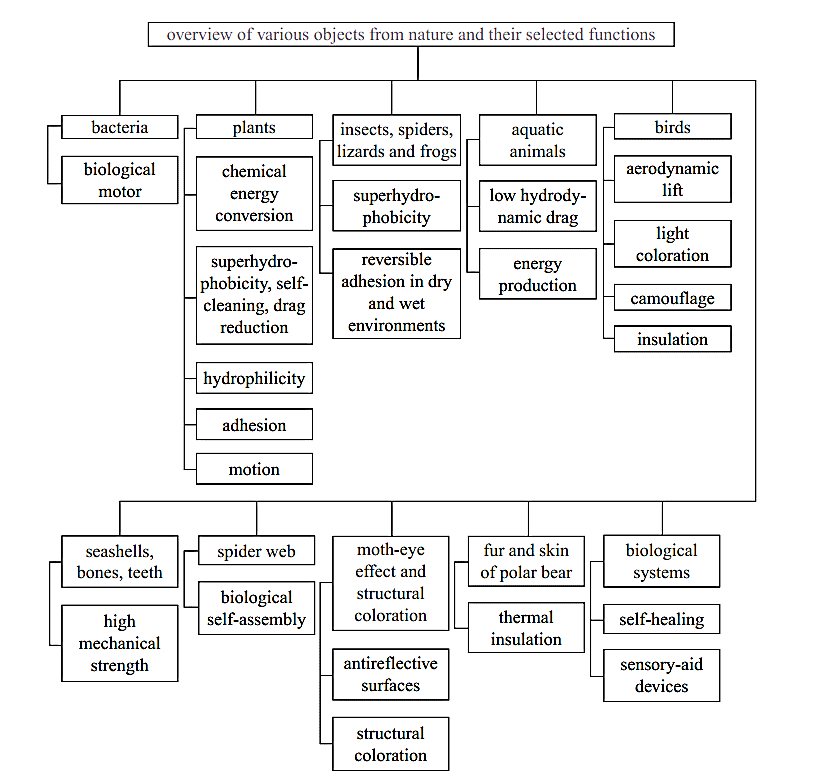
Overview of Various Objects from Nature and Their Selected Functions
Key Biomimetic Textile Applications at a Glance
| Nature’s Inspiration | Biological Mechanism | Textile Application | Key Benefit |
|---|---|---|---|
| Lotus leaf | Micro-papillae + hydrophobic wax; self-cleaning surface | Water-repellent, self-cleaning fabrics | Eliminates need for chemical coatings; stays clean in rain |
| Spider silk | Semi-crystalline protein polymer; high strength + elasticity | Anti-tear nanocomposite fibers | 5× stronger than steel of same diameter; stretches 5× its length |
| Gecko foot | billions of setae with spatulae; van der Waals adhesion | Dry adhesive fabrics (Geckskin) | A 70 g gecko can support 133 kg; potential for reusable adhesive textiles |
| Shark skin | Dermal denticles (riblets) with longitudinal grooves | Low-drag swimsuits (FASTSKIN) | 5–10% drag reduction; antibacterial surface |
| Firefly bioluminescence | Luciferase + luciferin + ATP reaction | E-fabrics with luminescent printed circuit boards | Enables glowing smart fabrics for wearable displays |
| Burdock hook | Barbed hooks for seed dispersal | Hook-and-loop fastener (Velcro) | 60 million yards produced annually; multi-million dollar industry |
| Mimosa pulvinus | Hydraulic turgor pressure actuation in leaf stalks | Touch-sensitive haptic fabrics | Shrink/expand in response to touch, sound, or light |
| Pine cone scale | Hygroscopic cellulose fiber expansion/contraction | Smart breathing fabrics | Adaptive ventilation; opens when warm, seals when cold |
| Chameleon skin | Iridophore crystal spacing changes visible color | Electronic skin; adaptive camouflage apparel | Real-time color change for concealment or fashion |
Examples of Biomimetics in Industry
- The airplane resulted from studying the flying technique of birds. Leonardo da Vinci sketched bird flight techniques as early as the 16th century, while the Wright brothers modeled their plane’s wings according to birds.
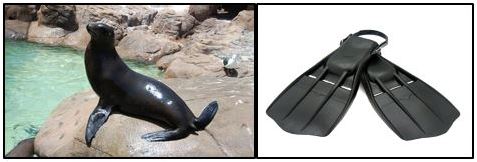
- The design and function of fins used by divers was copied from the legs of water creatures such as seals.
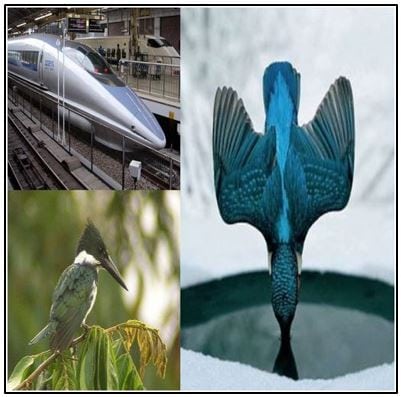
- The Japanese Shinkansen Bullet Train created excessive noise when emerging from tunnels. Observing how the kingfisher dives to catch fish with minimal splash, engineers modeled the train’s front end after the kingfisher’s beak. The result: a quieter train with 15% less electricity consumption and 10% higher speed [1].
- Tsunami warning systems have been developed by studying the extra-sensory communication of dolphins, which can detect threats at very early stages.
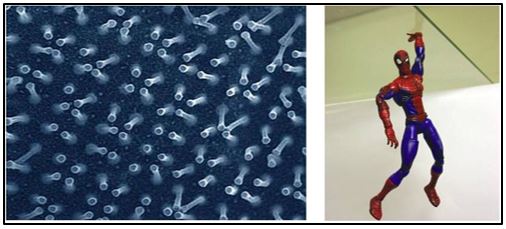
- Gecko tape is a new invention by Prof. Andre K. Geim of the University of Manchester. This glue-free, yet sticky material mimics gecko foot mechanics. Geckos have billions of tiny fibers called ‘setae’ on their feet, enabling movement across all surfaces, vertically or horizontally. These fibers create Van der Waals forces with surfaces; billions of fibers generate sufficient force for adhesion. A spider-man figure weighing 100 kg can be supported by just 0.5 cm² of gecko tape.
High Function Fibers Developed Using Biomimetic Approach
| Year | Structures Mimicked | Advanced-Function Fibers | Discoverer/ Inventor |
|---|---|---|---|
| Lumen structure of cotton | Hollow fiber | DuPont | |
| Conjugate structure of wool | Crimped fiber | M. Horio (Kyoto University) | |
| 1964 | Silver trappings of leather | Artificial leather | O. Fukushima (Kuraray) |
| 1965 | Super-fine structure of leather | Micro-denier fiber artificial suede | M. Okamoto (Toray) |
| 1978 | Micro-crater structure of cornea of moth | Fiber with deep colors and luster | S. Yamaguchi (Kuraray) |
| 1979 | Supramolecular structure of enzyme | Odor-killing fiber | H. Shirai (Shinshu University) |
| 1980 | Triangular cross-section of silk | Shingosen with silk scrooping | Y. Sato (Toray) |
| 1980 | Capillary water absorption by tree | Water absorption porous hollow fiber | T. Suzuki (Teijin) |
| 1983 | Surface structure of lotus leaf | Water-repellent fabric | F. Shibata (Teijin) |
| 1989 | Multi-layered structure | Fiber with light interference function | K. Matsumoto (Kyoto Institute of Technology) |
Approaches of Development
There are two approaches to biomimetics:
1. Top-Down Approach
Engineers search for ways to optimize existing products or processes with the aid of biologists and their pool of biological knowledge. Due to differing technical languages, biologists benefit from acquiring knowledge of various physical contexts, while engineers must be open-minded and willing to think in unusual directions.
After identifying the most promising solutions through structural and functional analyses, biologists and engineers abstract nature’s functional principles and create modified technical solutions. Engineers then find an optimal translation into techniques with appropriate production methods and materials.
2. Bottom-Up Approach
Biologists conduct fundamental research into nature’s structures, processes, and functional modes of operation. New principles are discovered, analyzed, and communicated to engineers. The two groups work together to abstract and transfer insights into new technical solutions [4].
Functional Properties Introduced in Textiles by Biomimetics
Electrospun Superhydrophobic Structures Inspired by Nature
Nature has built numerous fascinating materials and structured surfaces with excellent surface wettability. Biomimetic investigations of natural phenomena such as the self-cleaning effect of lotus and silver ragwort leaves, the superhydrophobic forces exerted by water strider legs, the anisotropic dewetting behavior of rice leaves, and waterfowl feathers have revealed that all are related to unique micro- or nanostructures on surfaces.
Electrospinning has become one of the most popular methods for fabricating micro- and nanofibrous materials with controllable compositions and structures. This technique offers excellent prospects for constructing biomimetic superhydrophobic surfaces.
Hierarchical Structures Inspired by Lotus Leaf
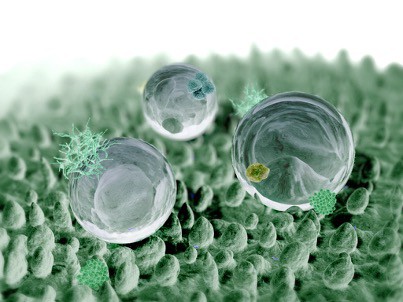
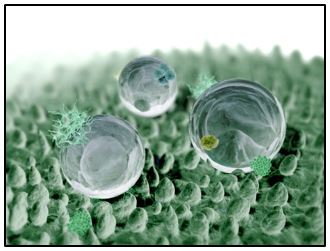
Many plant leaves exhibit remarkable superhydrophobic properties. The self-cleaning lotus leaf (Nelumbo nucifera) is among the most studied examples, exhibiting a high water contact angle (WCA) of approximately 161° and a sliding angle of approximately 2°.
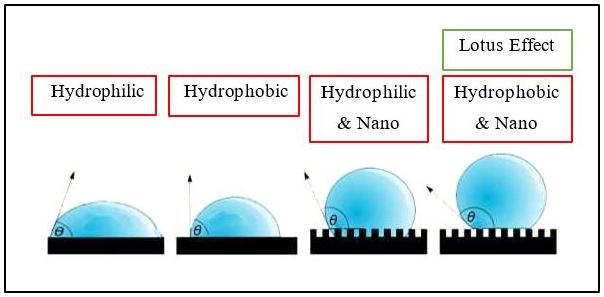
Raindrops are almost spherical on lotus leaf surfaces and roll off easily. This phenomenon is known as the ‘lotus effect‘ [5].
In 1997, Barthlott and Neinhuis first revealed the superhydrophobicity of lotus leaves.
The Science Behind Lotus Leaf Superhydrophobicity
Investigations showed that this unique property results from surface micrometer-sized papillae.
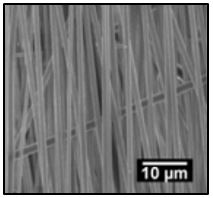
Detailed scanning electron microscopy (SEM) images reveal that lotus leaf surfaces are textured with 3–10 μm sized protrusions and valleys uniformly, decorated with hydrophobic wax-like nanoparticles measuring 70–100 nm in diameter.
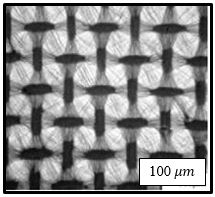
The cooperation of these micro- and nanoscale hierarchical surface structures with hydrophobic wax-like material creates superhydrophobicity. At a contact angle of 170°, the droplet contact area is only 0.6% of the total surface [5].
Inspired by lotus leaf, significant advances based on electrospinning technique now allow for the preparation of superhydrophobic surfaces.
Lotus Effect: Hydrophobicity and Self-Clean in Action
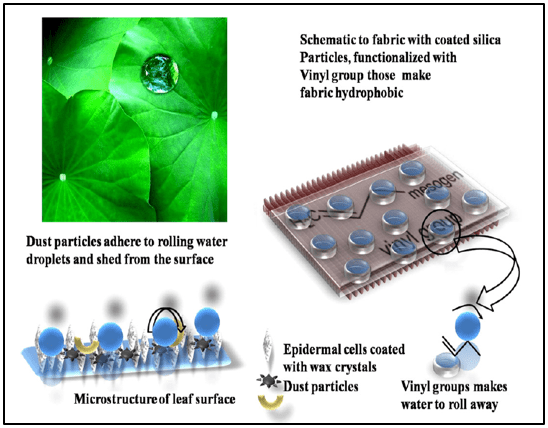
- Lotus plant leaves are self-cleaning.
- Leaves are coated with nanoscopically tiny bumps covered with a thin layer of wax.
- Dirt particles have no grip on the surface.
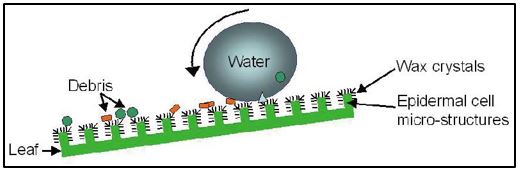
When it rains, water droplets roll down the leaves, pulling dirt particles free and washing them clean [6].
Design of Anti-Dust, Water Repellent Fabrics Inspired from Lotus Leaves
Researchers have created superhydrophobic poly-lactic acid (PLA) fabrics via UV-photografting of hydrophobic silica particles functionalized with vinyl surface groups over silica microstructures. This technique integrates successfully not only in PLA but also in various fabrics, providing a robust method for designing water- and dust-repellent textiles.
Spider Silk Inspired Anti-Tear Fabric Design
For centuries, the only natural source of continuous fibers available in large quantities was silkworms (Bombyx mori). The filaments were used for luxurious fabrics and technical applications such as parachutes because of their smoothness, lightness, luster, softness, and strength.
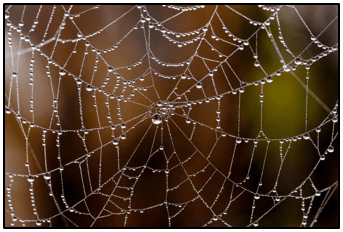
Other insects such as butterflies, moths, and spiders also produce silk. However, spider silk exhibits superior properties, including a unique combination of strength and elasticity.
Spider silk has remarkable properties. A silk thread 2.5–4 μm in diameter is five times stronger than a steel thread of the same diameter. Spider silk can stretch up to five times its relaxed length. A thread long enough to circle the globe at the equator would weigh only 320 grams. Darwin’s bark spider silk has a toughness of 350–520 MJ/m³, exceeding both steel and Kevlar.
The spider web is composed of filaments of a biopolymer based on protein (keratin). Despite being spun at ambient pressure and temperature with water as solvent, spider silk exhibits outstanding mechanical properties due to its semi-crystalline polymer structure [7].
Inspired by spider silk micro-nanocrystallite design, engineers model materials in the lab with strength and stretchability similar to natural spider silk. The synthetic nano-reinforced structure emulating natural spider silk enables the synthesis of polymer nanocomposites for future fabrics that rival the most advanced materials in nature.
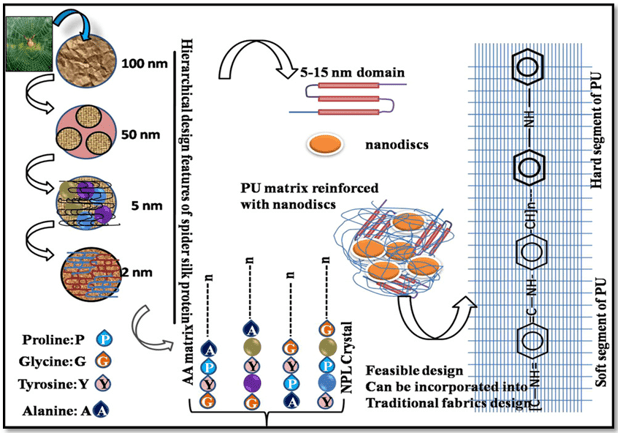
Using a new solvent-exchange approach compatible with current textile industry methods, engineers reinforce the hard microdomains of commercial polyurethane elastomer with tiny clay discs approximately 1 nm thick and 25 nm in diameter.
This reinforced molecular nanocomposite can be tuned to produce fibers similar to stretchy compounds such as nylon or Lycra for the traditional textile industry [6].
Gecko Inspired Dry Adhesion for Movement Along Smooth Surfaces
Gecko feet consist of hierarchical fibrous structures that enable adhesion to and movement along very smooth surfaces, often upside down.
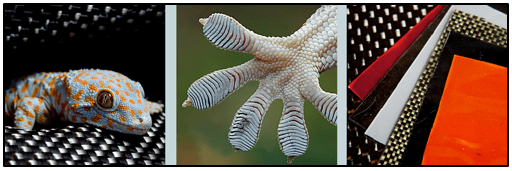
The gecko footpad is covered with approximately 14,000 setae per square millimeter. Each seta has a diameter of 5 μm and branches into 100–1,000 spatulae, each approximately 0.2 μm long (see Figure 17).
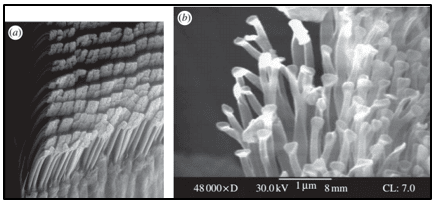
The complex structure uses van der Waals forces for adhesion. When two surfaces come into intimate contact, considerable van der Waals forces are generated. Direct setal force measurements attribute adhesion to van der Waals forces rather than suction, friction, or electrostatic forces.
Each spatula exerts an adhesive force of 5–25 nanonewtons (nN). Each gecko footpad seta can resist an average force of 20 mN, resulting in an adhesive force of 10 N for a foot pad area of approximately 100 mm².
Some gecko species have adhesion strength capabilities as high as 100 kPa. A mature 70-gram gecko can support approximately 133 kilograms using its setae.
How Geckos Walk on Surfaces
Although strong adhesive forces would make movement difficult, geckos have developed a unique walking mechanism. They curl their toes for attachment and peel them during detachment, eliminating forces between foot and surface and enabling easy movement.
Fabricating millions of tiny densely packed nanofibers standing upright on a substrate, much like a flocked fabric surface, is deceptively simple in concept but considerably more complex in execution.
Challenges
- Higher Aspect Ratio: The first challenge is ensuring that tiny fibers have sufficiently high aspect ratio to contact microscopically irregular surfaces.
- Avoiding Entanglement and Bunching: High aspect ratio fibers tend to collapse and stick together, causing matting. If spacing between adjacent fibers is too small, intermolecular forces lead to bunching. Theoretical analyses and experimental data indicate that high modulus fibers with high aspect ratio and small inter-fiber spacing are required for good adhesion.
Production Materials and Techniques
Synthetic gecko foot fibers have been created using various materials and techniques, including:
- Nanomoulding using silicone, polyimide, polyvinylsiloxane, and polyurethane;
- Photolithography using polyimide, carbon nanotubes, and polyurethane.
Reported adhesion strength in many cases exceeded that of natural gecko feet. Carbon nanotube-based gecko tapes demonstrate significantly higher stresses than those supported by natural gecko feet [8].
Shark Skin Inspired Low Hydrodynamic Surface Drag
Most shark species (superorder Selachimorpha) move in water with high efficiency and maintain buoyancy due to the special anti-drag design of their skin, which reduces drag by 5–10%. Scanning electron microscope studies have revealed the tooth-like scales of shark skin, called dermal denticles (little skin teeth or riblets), which are ribbed with longitudinal grooves aligned parallel to the direction of local water flow.
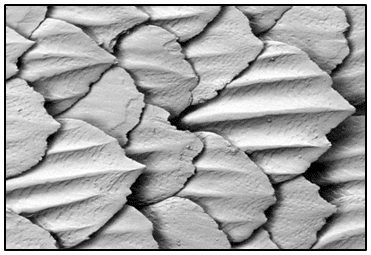
Shark denticles produce vertical vortices or spirals of water, keeping water closer to the shark’s body and reducing surface drag.
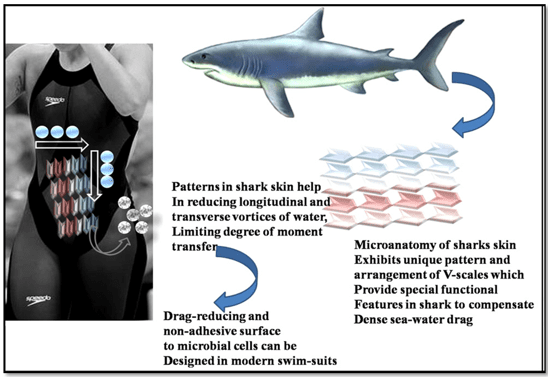
The V-shaped scales are approximately 200–500 μm in height and regularly spaced at 100–300 μm intervals over most of the shark’s body. The ratio of scale height to tip-to-tip spacing has a critical role in reducing longitudinal and transverse drags.
Additionally, the microtopography acts as antibacterial fouling surfaces, making it inhospitable for microorganisms to attach to the grooved surface.
Inspired by this natural design, scientists add technological improvements to swimming suits by designing antimicrobial fabrics without chemical treatments. In Olympic swimming competitions, 1/100th of a second can determine the difference between winning and losing.
Swimmers now use suits designed on the hydrodynamic principles of shark skin. These tightly fitting suits, covering large areas of the body, are made of fabrics that mimic shark skin properties by superimposing vertical resin stripes. This phenomenon is known as the Riblet Effect.
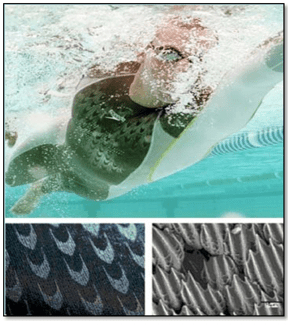
- SPEEDO created the FASTSKIN swimsuit to mimic shark skin.
- The design allows water to escape along channels between riblets.
Firefly Glow: Designing E-Circuited Fabrics
Light production (glow) in fireflies results from an enzyme-catalyzed (luciferase) biochemical reaction called bioluminescence. This process occurs in specialized light-emitting organs, typically on a firefly’s lower abdomen.
The enzyme luciferase acts on luciferin in the presence of magnesium ions (Mg²⁺), adenosine triphosphate (ATP), and oxygen to produce light.
This chemical process provides motivation to design glowing fabrics for the textile industry. Researchers produce light-emitting devices with fabric printed circuit boards (PCBs) and successfully connect them with wearable display formats using socket buttons.
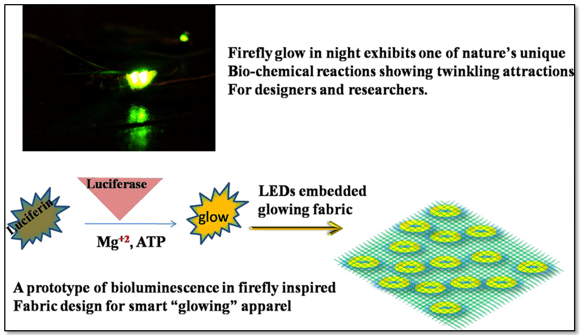
This capability enables firefly glow in fancy dresses, utilizing electronic textile engineering (e-fabric) design [6].
Hair with Hooks: VELCRO
Many plant surfaces have hairs (also known as trichromes). These hairs are found on aerial surfaces of most flower plants, some conifers, and mosses. Their structures are often complex, and their functions vary from plant to plant. Hairs may anchor seeds for dispersal by animals or wind, and some form hooks for climbing purposes.
In Cynoglossum officinale (houndstongue), the hairs have lateral barbed hooks for seed dispersal.
The Velcro Effect
Fruits of the burdock plant consist of hooks. Cockleburs attach readily to clothing.
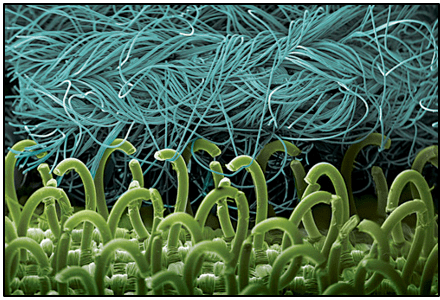
In 1941, Swiss engineer George de Mestral observed that burdock spines were tipped with tiny hooks that provided instant gripping but could be released with light force. He invented hook-and-loop fasteners, patented in 1955. The word Velcro derives from the French words velour (velvet) and crochet (hook) [2].
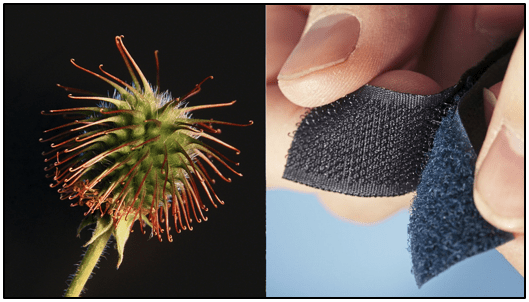
George de Mestral patented hook-and-loop in 1955 and established production of sixty million yards of Velcro annually. Today, it is a multi-million dollar industry with household, industrial, space program, and medical applications [3].
Touch Sensitive Apparel Design
The touch-sensitive plant Mimosa pudica exhibits human muscle actin-myosin-like quick sensing and actuation through its leaf-moving muscle, called the pulvinus, which performs touch-sensitive hydraulic actuation.
Pulvini are swollen parts at the base of Mimosa leaf stalks or petioles. They act as autonomous organs housing mechano- and photoreceptors that enable leaf movement in response to external stimuli. Anatomically, all pulvini comprise thick-walled, water-conducting vascular tissue surrounded by thin-walled motor cells.
These specialized cells undergo visible swelling and shrinking, actuated by changes in turgor pressure and rapid growth expansion across leaf epidermis involving ion transport. This exhibits one of the fastest plant movements when touched.
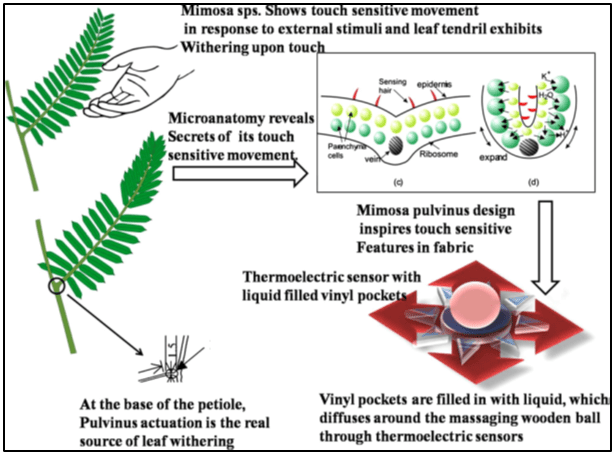
Mimosa pulvinus-mediated touch-sensitive actuation creates an opportunity to design fabrics that shrink and expand in response to external stimuli such as touch, sound, and light. In the fashion industry, this enables folding-unfolding modes of smart fabrics with novel sensing capacity.
Adopting functional mimesis from Mimosa pulvinus, researchers have designed haptic fabrics using knitted smart materials with touch therapy features. These wearable fabrics equipped with actuators and sensors perform artificial massaging and aromatizing functions while walking.
Such fabrics provide a sympathetic side of apparel design by attending to, understanding, and responding to another person’s emotional expressions—a fundamental requisite for elderly people spending time alone in hospitals.
Pine Cone Inspired Hygroscopic Movements for Smart Breathing Fabrics
The scales of seed-bearing pine (Pinus radiata) cones move in response to changes in relative humidity. This hygroscopic movement results from a structural-functional mechanism at the base of each seed petal or scale.
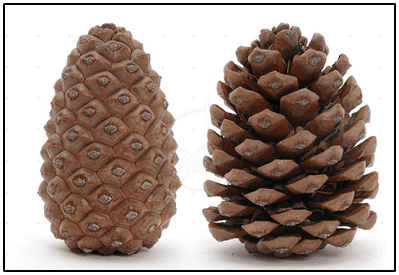
When dry, the cone opens by moving scales away, facilitating seed release. When in a moist environment, the scales close. Microscopic anatomy of Monterey pine cones reveals two types of scales growing from the main body:
- The ovuliferous scale
- The bract scale
The larger ovuliferous scales bear microscopic sclerenchymatous (cellulose) fibers on upper and lower surfaces, measuring 8–12 μm in diameter and 150–200 μm in length. These respond to relative humidity changes by opening and closing the cone aperture during seasonal changes.
The orientation of cellulose microfibrils between two layers of scales and their expansion in response to relative humidity controls the bending of scales, facilitating opening and closing of the cone aperture for seed dispersal.
Development of Smart Breathing Fabrics
This natural phenomenon inspired researchers to mimic pine cones for designing humidity-sensitive adaptive clothing. This delivers relief from moisture discomfort in clothing microclimate as experienced in urban environments.
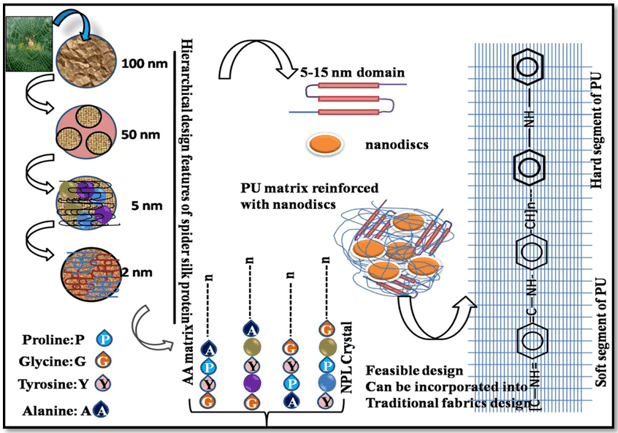
The fabric design utilizes two layers: a layer of thin spikes of wool (a water-absorbent material) that opens when wet from the wearer’s sweat, similar to the ovuliferous scale in pine cones. When the layer dries, the spikes automatically close.
An underneath second layer protects the wearer from rain. This smart fabric works like breathing cloth, taking dry air in while closing fabric pores and releasing moist air while opening.
Such fabric adapts to changing temperatures by opening when warm and shutting tight when cold, similar to a pinecone’s bract.
Camouflage
Camouflage is the use of any combination of materials, coloration, or illumination for concealment, either by making animals or objects hard to see (crypsis) or by disguising them as something else (mimesis).
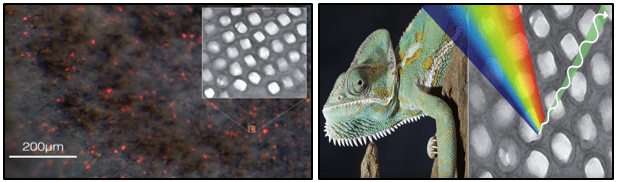
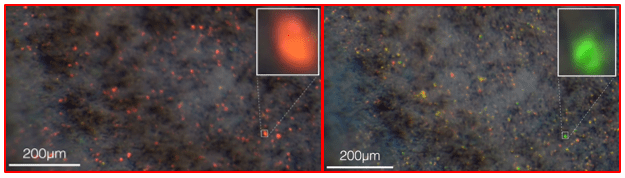
The phenomenon of camouflage in certain fishes and amphibians results from excellent iridescent lateral stripes or spots that change color from blue-violet under low light to green, orange, and red under increased light intensities.
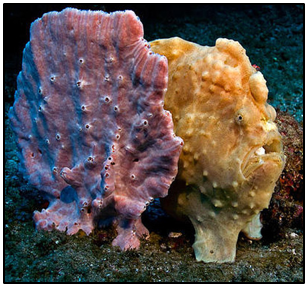
The reflected iridescent colors are produced by constructive interference of light from stacks of thin alternating transparent layers with different refractive indices.
The Mechanism of Chameleon Color Change
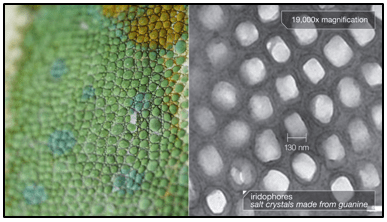
Development of Camouflage Skin and Apparel
1. Electronic Skin
Bio-inspired stretchable e-skin with interactive color-changing and tactile-sensing properties has been developed. This concept is realized through the development and integration of a stretchable, highly tunable resistive pressure sensor (PS) and stretchable organic electrochromic devices (ECDs).
Besides detecting applied pressure, this e-skin distinguishes varying applied pressures through real-time visible color change. The work demonstrates low power consumption, interactive, and color-changeable e-skin, prepared by a cost-efficient all-solution processing approach.
![A Chameleon-Inspired Stretchable Electronic Skin with Interactive Colour Changing Controlled by Tactile Sensing [10]](https://textiletuts.com/wp-content/uploads/2020/01/A-Chameleon-Inspired-Stretchable-Electronic-Skin-with-Interactive-Colour-Changing-Controlled-by-Tactile-Sensing-10.png)
2. Camouflage Apparel
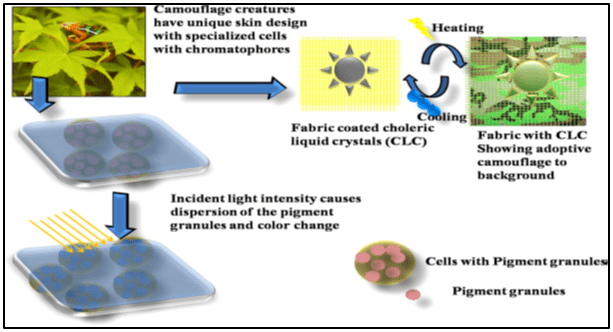
Inspired by this natural phenomenon, scientists have designed cholesteric liquid crystals (CLCs) to alter the visible color of objects for thermal and visual camouflage in fabrics. The color of CLCs changes with temperature-sensitive thermocouples.
The heating-cooling ability of thermocouples adjusts liquid crystal color to match the object’s background color, providing camouflage or adaptive concealment.
Nature-inspired camouflage has stimulated optical camouflage research in fabric design, developing phased optical array (OPA) like holographic designs in three-dimensional holograms of background scenery on objects to be concealed.
Self-Healing Fabric
Self-healing fabric design is inspired by nature’s healing mechanism in mammalian tissue. Nature’s self-healing ability has generated new ideas and mechanisms of fundamental interest for engineers designing self-healing fabrics.
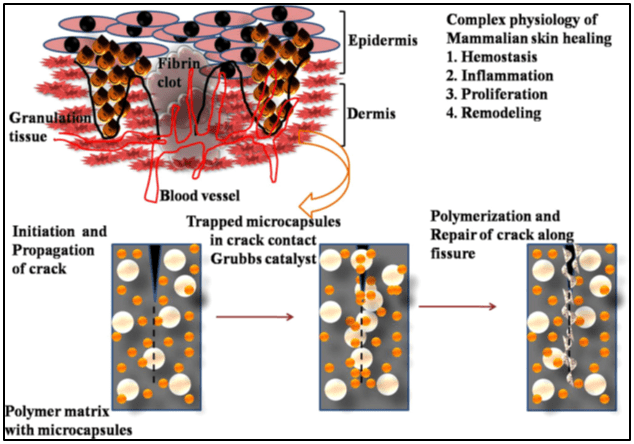
The healing process in mammals involves four phases: hemostasis (arresting bleeding), inflammation (recruiting immune cells to clear microbial population and cell debris), proliferation (growth of new tissue), and remodeling (retaining tissue shape like before injury).
These events occur spontaneously and autonomously in ordered phases, triggered by injury processes at the wound site. However, the healing process is time-consuming. The intrinsic mechanism evolved around chemical reactions of active enzyme cascades and their inactive precursors, known as clotting factors.
A key aspect of mammalian healing is the rapid hemostatic response to arrest bleeding. Actual tissue and skin healing follows, which is a more lengthy process. Mimicking this enormously complex process for smart fabric design has limitations due to the lack of replenishment of engineering components in self-healing fabric systems.
Self-Healing Capable Polymer Composite
Nature’s healing machinery has inspired chemists and engineers to propose new ideas and mechanisms. Using a biological bleeding approach to healing, White et al. created microcapsule-reinforced hollow fiber polymer composites. This lightweight material exhibits high stiffness and superior elastic strength over conventional materials.
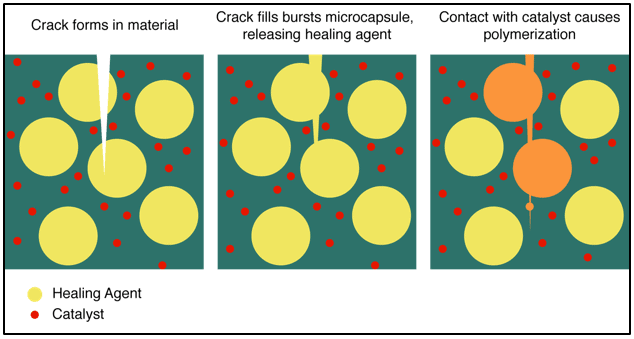
Microencapsulation of self-healing components involves a monomer, dicyclopentadiene (DCPD), stored in urea-formaldehyde microcapsules dispersed within a polymer matrix.
When microcapsules are ruptured by a progressing crack, monomer is drawn along the fissure where it contacts a dispersed particulate catalyst (ruthenium-based ‘Grubbs’ catalyst), initiating ring-opening metathesis polymerization (ROMP) and repairing the crack. This system restores up to 67% of original strength.
Results confirmed that dispersion of microcapsules within composite laminate material did not detrimentally affect the stiffness of the parent architecture. A notable advantage of microencapsulation self-healing is the ease with which it can be incorporated into bulk polymer material as a potential self-healing reinforcement agent for future fabrics.
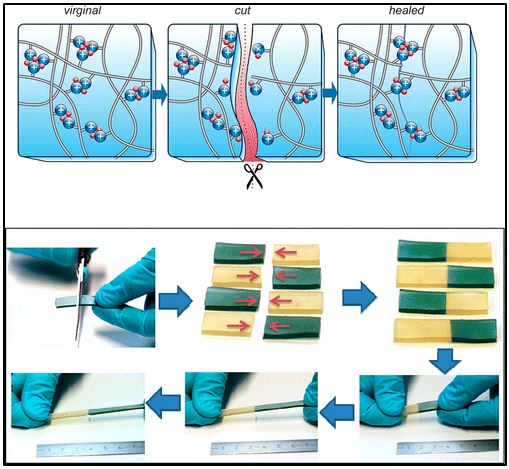
In another landmark approach, self-healing rubber-like material acts as molecular glue and seals damaged areas when two broken pieces are brought together. This thermosensitive polymer, made from supramolecular chemistry of fatty acids and urea, provides an exciting opportunity for incorporation into fabrics [6].
Conclusion
Nature is an extremely vast database of structures and mechanisms that are clearly superior to man-made equivalents. There are numerous examples of fibrous structures, multifunctional materials, thermal insulating materials, structural colors, and other features that serve as sources of inspiration for future sustainable textiles.
Textiles offer unique opportunities to imitate nature. The base units of each textile structure at the most elementary level of the hierarchy (from nano to micro) are organic fibers, many of which are natural.
Textile surfaces, like many natural functional surfaces, offer excellent opportunities for developing new functionality. These factors enable an easier pathway to borrowing biomimetic principles of nature in the textile field than in other industrial areas.


