
Why Is My Kenmore Sewing Machine Sewing Backward?

The most common reasons a Kenmore sewing machine sews backward are: the needle is inserted incorrectly, the feed dogs are disengaged (stitch length dial set to 0), the bobbin is inserted in reverse, the machine is threaded incorrectly, or there is hardened lubricant in the reverse mechanism. Any of these issues disrupts the timing between the needle and feed dogs, causing the machine to sew in reverse instead of forward.
This guide covers every possible cause and provides step-by-step fixes to get your Kenmore sewing forward again.
Before You Troubleshoot — Quick Checklist
- Is the stitch length dial set above 0? (Setting to 0 disengages feed dogs)
- Is the reverse lever spring intact and returning to forward position?
- Is the needle fully inserted (at least 5 mm deep) with the flat side facing the correct direction?
- Has the machine been oiled in the last 30 days or 50 hours of use?
Key Settings Quick Reference
| Setting | Correct Value | What Happens If Wrong |
|---|---|---|
| Stitch length dial | 2.0–2.5 mm (10–12 stitches per inch) | Dial at 0 = feed dogs disengaged = backward or no forward motion |
| Top thread tension | 4–5 (standard), up to 7 for heavier fabric | Below 2 = loose stitches; above 7 = bobbin thread cannot interlock |
| Needle insertion depth | Minimum 5 mm into needle clamp | Shallow insertion disrupts needle plate and hook timing |
| Oiling frequency | Monthly or every 50 hours of use | Dried lubricant causes hesitation and reverse stitching |
| Bobbin rotation direction | Clockwise in Kenmore top-drop bobbin models | Reversed bobbin causes immediate backward stitching and tangles |
| Hair dryer heat (for lubrication) | 80–100 °C; never exceed 120 °C | Overheating deforms plastic housing on post-1995 models |
Common Causes of a Kenmore Sewing Machine Sewing Backward
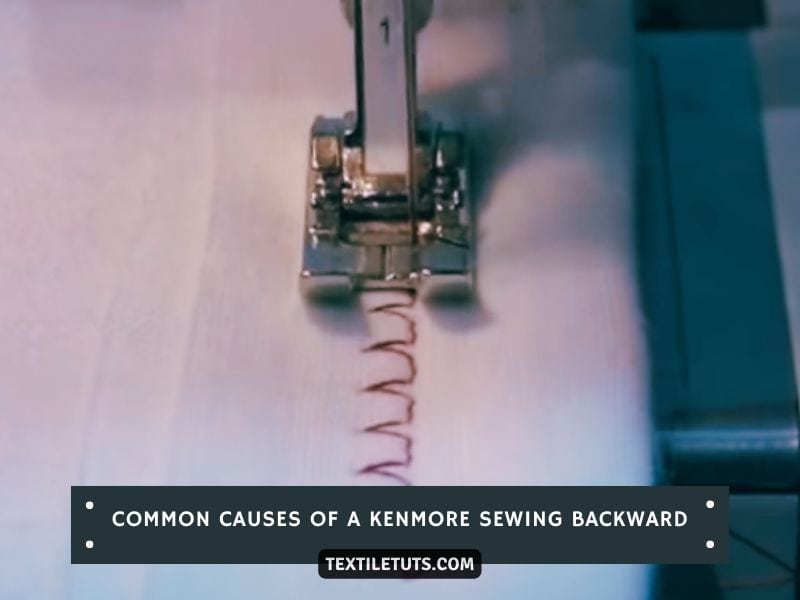
If your Kenmore sewing machine is sewing backward, one of the following issues is likely responsible. Here is a complete breakdown of each cause:
Needle Is Incorrectly Inserted
One of the most common causes of a backward-sewing Kenmore machine is an incorrectly inserted needle. Universal needles have a flat face on the shank that must align with the flat side of the needle holder. If the needle is not inserted fully into the clamp—minimum depth of 5 mm—or if it is rotated at an angle, the needle plate and hook timing are disrupted, causing reverse stitching. Kenmore domestic machines use standardized 15×1 or HAx1 needle types, which are compatible with most universal needle systems.
The Timing Is Off
Sewing machine timing refers to the precise synchronization between the needle and the hook/bobbin assembly. When the needle reaches its lowest point and begins to rise, the hook must catch the thread loop at exactly the right moment. This timing is measured in degrees of rotation—typically between 135° and 180° from needle bottom dead center on most domestic models. If the timing is even 1–2 mm off, the needle will not catch the bobbin thread correctly and the machine will sew backward or produce a loose, lopsided stitch.
Bobbin Is Inserted Incorrectly

If the bobbin is not inserted correctly—with the bobbin rotating clockwise in its case—the thread will not loop correctly around the needle thread. Kenmore top-drop bobbin models (common in the 148 series and later) require the thread to pull off the bobbin in a specific direction. A reversed bobbin causes immediate backward stitching and tangled thread underneath the fabric.
Tension Is Incorrect
Incorrect thread tension is a frequent cause of reverse sewing on Kenmore machines. The top thread tension dial typically ranges from 0 to 9, with 4–5 being the standard setting for regular sewing with medium-weight fabric. If the tension is set above 7, the top thread is pulled too tightly and the bobbin thread cannot interlock properly. If set below 2, the top thread hangs loosely and the stitch formation collapses. Both extremes disrupt the stitch balance and cause the machine to sew in reverse.
Feed Dogs Are Not Engaged
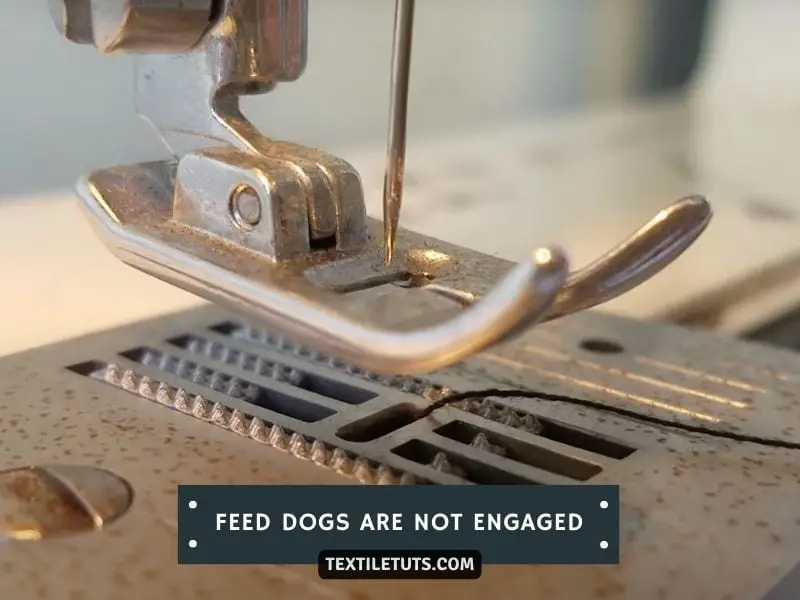
The feed dogs are the serrated metal teeth beneath the needle plate that grip and advance fabric through the machine. On Kenmore models, the feed dogs engage automatically when the stitch length dial is set above 0. Setting the dial to 0 or below engages a drop-feed mechanism, which disables fabric advancement. Without feed dog action, the needle cannot establish a forward stitch rhythm and the machine will sew in place or in reverse. The standard stitch length for balanced straight stitching on medium-weight cotton is 2.0–2.5 mm (approximately 10–12 stitches per inch).
The Machine Is Threaded Incorrectly
An incorrectly threaded machine is one of the most common causes of reverse stitching. The thread must follow an exact path: from the spool pin, through the tension discs, past the take-up lever, through the thread guide, and into the needle eye—from front to back. If the thread slips out of the tension discs or bypasses the take-up lever, the thread loop does not form correctly on the needle, and the hook cannot catch it. This immediately produces backward stitches on Kenmore machines.
The Machine Needs Oiling
Regular oiling maintains smooth operation in sewing machines. Sewing machine oil (a light petroleum-based lubricant, typically ISO VG 10–15) should be applied monthly for regular use or after every 50 hours of operation. When the machine is not oiled, dried lubricant hardens on the needle bar, bobbin case hinge, and reverse mechanism cam. This friction causes hesitation and stalling in the needle cycle, which interrupts forward stitch formation and causes reverse stitching. Kenmore recommends oiling the hook race and needle bar bearing at each bobbin change.
The Machine Is Dirty
Accumulated lint, thread fragments, and dust create resistance in the needle bar channel and around the bobbin case. This buildup—typically 0.5–1 mm thick in a heavily used machine—prevents smooth needle bar reciprocation and interferes with the hook timing. Cleaning involves removing the needle plate, brush-out of the bobbin area with a soft brush, and wiping the needle bar with a lint-free cloth. Most Kenmore service manuals recommend this cleaning every 25–30 hours of use.
The Machine Is Jammed
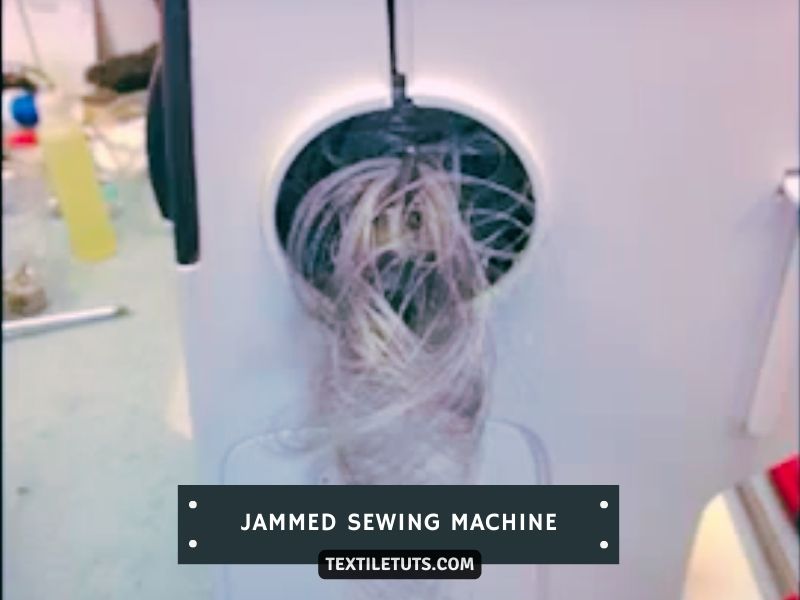
A jammed machine typically results from thread tangles in the bobbin race, a broken needle that has fallen into the hook area, or lint compacted to 2–3 mm thickness. When the hook cannot rotate freely, the needle timing breaks and the machine sews backward or not at all. Freeing the jam and resetting the bobbin and needle typically resolves this.
Internal Mechanical Failure
In rare cases, a Kenmore sewing machine sews backward due to internal mechanical failure—specifically a slipping timing belt, a cracked cam gear, or a failed reverse lever spring. These issues produce persistent, unresolveable backward stitching regardless of needle, thread, or threading corrections. A slipping timing belt in Kenmore front-wheel drive models typically reduces the hook rotation speed by 15–30%, which is audible as a hesitation sound before the reverse stitching occurs. Professional service is required for these repairs.
Quick-Reference Troubleshooting Guide
| Symptom | Most Likely Cause | Quick Fix |
|---|---|---|
| Machine sews backward on all stitches | Feed dogs disengaged (dial at 0) | Rotate stitch length dial to 2.0–2.5 mm |
| Backward stitches on top, loops underneath | Bobbin inserted in reverse direction | Remove bobbin, reinsert with clockwise rotation |
| Intermittent backward stitching | Incorrect threading / thread slipped from tension discs | Re-thread from spool pin, ensure thread seats between tension discs |
| Persistent backward stitching after fixes | Timing belt slippage or internal mechanical failure | Contact Kenmore service technician |
How to Fix a Kenmore Sewing Machine That Sews Backward
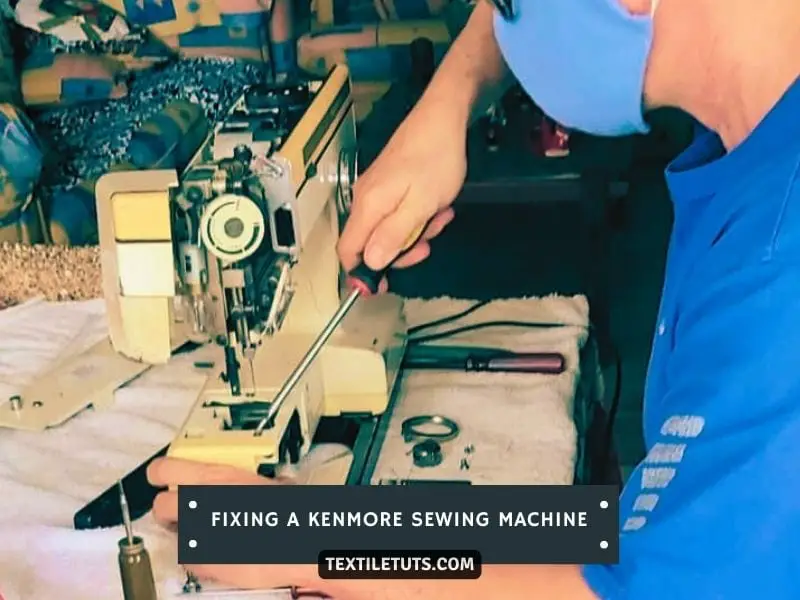
Check the Basics
Confirm that your Kenmore sewing machine is set to sew in forward motion with the stitch selector on a straight stitch setting above 0. Press the reverse lever briefly and release to verify the spring mechanism returns it to the forward position. If the spring is missing, stretched, or repositioned, replace or adjust it. Test with the stitch length dial set to 2.5 mm (approximately 12 stitches per inch) on a scrap fabric before longer seams.
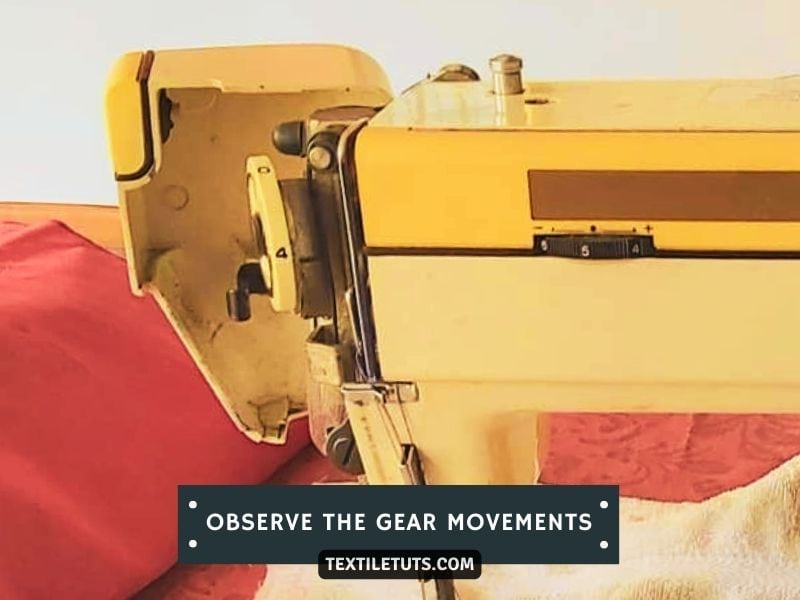
Observe the Gear Movements
Uncover the top of your sewing machine with a screwdriver to reveal the gears. Press the reverse button and observe the gear teeth movement—the driven gear should rotate in the opposite direction to the drive gear. Ensure no gear teeth are chipped, worn down to less than 0.5 mm in height, or jumping engagement. On Kenmore 148-series models, the reverse cam gear is prone to hairline cracking after extended use.
Inspect the Cam and Adjust as Necessary
Examine the cam at the top of your Kenmore sewing machine’s main shaft. The cam sits above a dual-pronged fork-like bar and should align with the timing mark—a scored line—on the primary shaft. If the two marks do not align within 0.5 mm, loosen the cam set screw with a compatible screwdriver, realign the marks, and tighten the screw to 1.5–2.0 N·m of torque. Overtightening the cam screw can crack the cam on older Kenmore models.
Apply Heat to Loosen Hardened Lubricant
Set a hairdryer to 80–100 °C (176–212 °F) and direct warm air at the top cover and reverse mechanism area for 30–60 seconds. While applying heat, gently press the reverse lever to work the hardened lubricant loose. This is most effective when the machine has been idle for more than 6 months and the lubricant has become gummy. Never use temperatures above 120 °C, as this can deform plastic housing components on Kenmore models manufactured after 1995.
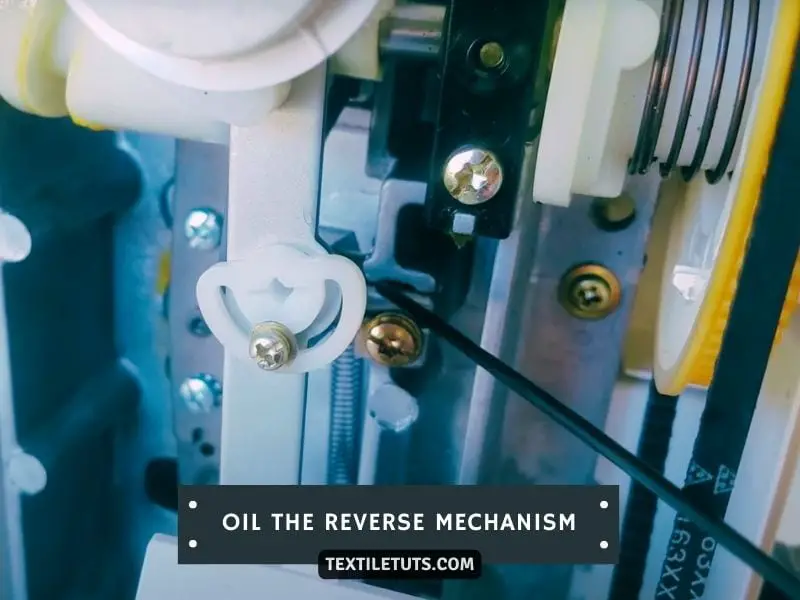
Lubricate the Reverse Mechanism
Apply one drop of ISO VG 10–15 sewing machine oil directly onto the reverse cam pivot point and the needle bar bearing. While oiling, work the reverse lever in slow strokes 5–10 times to distribute the lubricant. Use only petroleum-based sewing machine oil—synthetic or vegetable oils can swell rubber seals and damage plastic components. A single drop (approximately 0.02–0.05 mL) is sufficient per lubrication point.
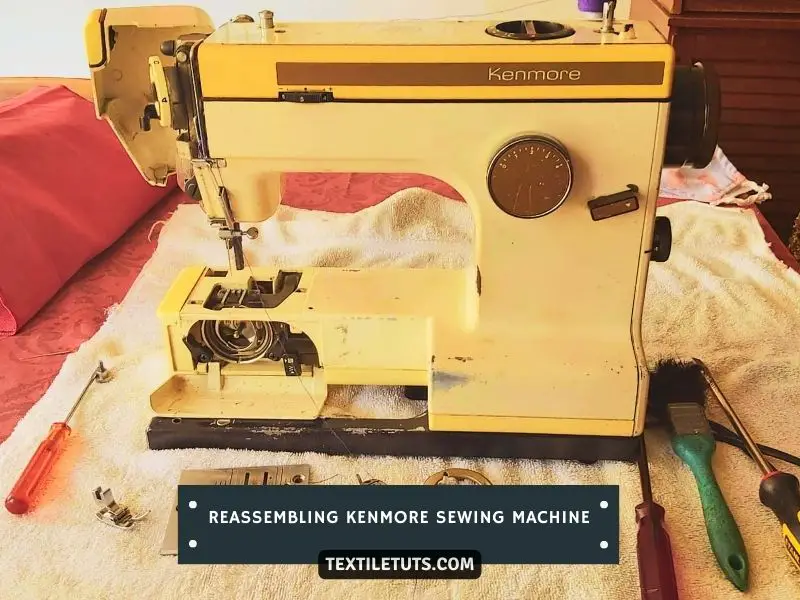
Reassemble and Test the Sewing Machine
After lubricating, replace the top cover and secure all screws to their specified torque. Test the reverse lever and confirm forward stitching on a 15 cm (6-inch) scrap of medium-weight cotton fabric. A proper forward stitch should show 10–12 stitches per 2.5 cm (1 inch) at the 2.5 mm setting. If backward stitching persists, repeat steps 2–5 or consult a Kenmore-authorized service technician.
Does Price Determine Whether a Sewing Machine Sews Forward or Backward?
When shopping for the best sewing machine under $150, price does not reliably predict whether a machine will sew forward or backward. Budget models in the $50–$100 range from established brands often include proper needle-and-feed-dog synchronization. The more reliable indicators of consistent forward stitching are: a metal needle bar (rather than plastic, which wears faster), a Kelvin-temperature-rated motor (typically 45–60 °C at continuous use), and a publicly available parts and service network. With regular maintenance, many budget machines produce consistent forward stitches for 500+ hours before requiring service.
Final Words
Understanding why your Kenmore sewing machine sews backward requires a systematic approach to troubleshooting. The issue is almost always one of the following: incorrect needle insertion, disengaged feed dogs, a reversed bobbin, improper threading, or hardened lubricant in the reverse mechanism.
Work through each potential cause in order, starting with the simplest fixes (stitch length dial, bobbin direction, threading) before moving to internal components. Most backward-sewing issues resolve without professional service.
If the problem persists after all troubleshooting steps, the issue likely lies in the timing belt, cam gear, or motor—components that require Kenmore-authorized service technicians and specialized adjustment tools.
References
- Encyclopedia Britannica. (2024). Sewing Machine. Britannica.
- Wikipedia contributors. (2024). Sewing Machine. Wikipedia.
- Wikipedia contributors. (2024). Sewing Machine Needle. Wikipedia.
- Singer. (2024). Sewing Machine Care and Maintenance. Singer.


