
Sewing Thread Count Meaning | Ticket Number

History of Ticket Number
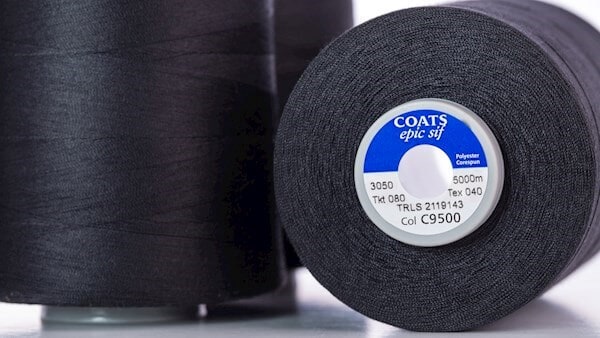
Ticket number is the standardized measurement system for expressing sewing thread thickness or fineness — the higher the ticket number, the thinner the thread. Unlike yarn count used for weaving and knitting, ticket number specifically governs sewing thread in the ready-made garments industry, where thread selection is critical for achieving efficient seams and proper aesthetic results in finished apparel.
Thread size acknowledgment—known as ticket number—underwent a significant transition in the textile industry. Diverse categories of yarns historically had dissimilar counting labels, creating confusion across the global market. The Thread Institute addressed this by approving a unified ticket numbering system based on the TEX counting system for yarn, effective January 1, 1980.
Commercial sewing and embroidery machines typically use 40 tex threads, which corresponds to a ticket number of 75 in the cotton system.
History of Ticket Number
The Thread Institute addressed the historical problem of dissimilar counting labels across yarn categories by approving a unified ticket numbering system based on the TEX counting system, effective January 1, 1980. This standardized method was implemented for use by fellow industrialists, officials, and jobbers throughout the textile sector.
ANSI (American National Standards Institute), ISO (International Organization for Standardization), and ASTM (American Society for Testing and Materials) approved this implementation. Both former methods and the TEX method remain in use throughout the global industry until the transition is fully complete. Understanding the various ticket numbering methods is essential for appropriate application in manufacturing and procurement.
What is Ticket Number — The Definitive Commercial Thread Measurement
Ticket number is a commercial counting method for expressing a sewing thread’s fineness or thickness. Ticket numbers follow the indirect counting system, which uses a fixed-weight method: the numerical quantity of unit length that provides a fixed weight. As the ticket number increases, the thread becomes thinner or finer. As the ticket number decreases, the thread becomes thicker or coarser. Ticket number serves as the thread producer’s reference value for the specific measurements of a given sewing thread.
Thread ticket number is measured through the resultant count and calculated into 3-fold terms, regardless of how many yarn plies are doubled together to produce the thread. Ticket numbers are designated by tkt, Metric Count (Nm), or Cotton Count (Ne), among other systems.
The metric and cotton ticket numbering systems are primarily used in the prêt-à -porter (ready-to-wear) garments industry. Thread selection for any particular application depends on several factors, with ticket number being the primary consideration for achieving efficient and aesthetic requirements in the final product.
Thread measurements are expressed through various numbers and numbering methods derived by linking unit length and mass. Understanding these counting methods and their relationships is essential for correctly interpreting thread size specifications.
Ticket (tkt) Numbering Systems
1. TEX Ticket Number
TEX expresses spun yarn measurement as the ratio of unit length to weight—specifically, grams per 1,000 metres of yarn. The TEX system is a direct measure of linear density established under ASTM D1244. A higher TEX value indicates a thinner thread. Historically, thread was prepared exclusively from 3-ply spun yarns, so a 30/3 thread had a ticket number of 30, and a 45/3 thread had a ticket number of 45.
Modern sewing thread now uses two, three, four, and six plies. A ticket number of 40 may designate a 40/2 (2-ply), 40/3 (3-ply), 40/4 (4-ply), or 40/6 (6-ply) thread. Although the diameter remains the same across ply variations, individual plies become finer with each additional ply. A greater number of doubled yarns indicates superior tensile strength in the thread.
| TEX | Total DeciTEX (dTEX) | dTEX × Ply (2-Ply) | dTEX × Ply (3-Ply) | Formula for Ticket No. | Ticket No. |
|---|---|---|---|---|---|
| 50 | dTEX 500 | 250 × 2 | 166 × 3 | (1000�50 × 3) | 60 |
| 70 | dTEX 700 | 350 × 2 | 233 × 3 | (1000�70 × 3) | 43 |
| 90 | dTEX 900 | 450 × 2 | 300 × 3 | (1000�90 × 3) | 33 |
| 120 | dTEX 1200 | 600 × 2 | 400 × 3 | (1000�120 × 3) | 25 |
Cotton sewing threads use letter designations from F to A, then 0 to 0000. Letter designation F signifies the thickest or coarsest sewing thread, while A denotes medium-fine thread. Numbers 0 to 0000 express progressively thinner or finer thread quality, with 0000 representing the finest grade.
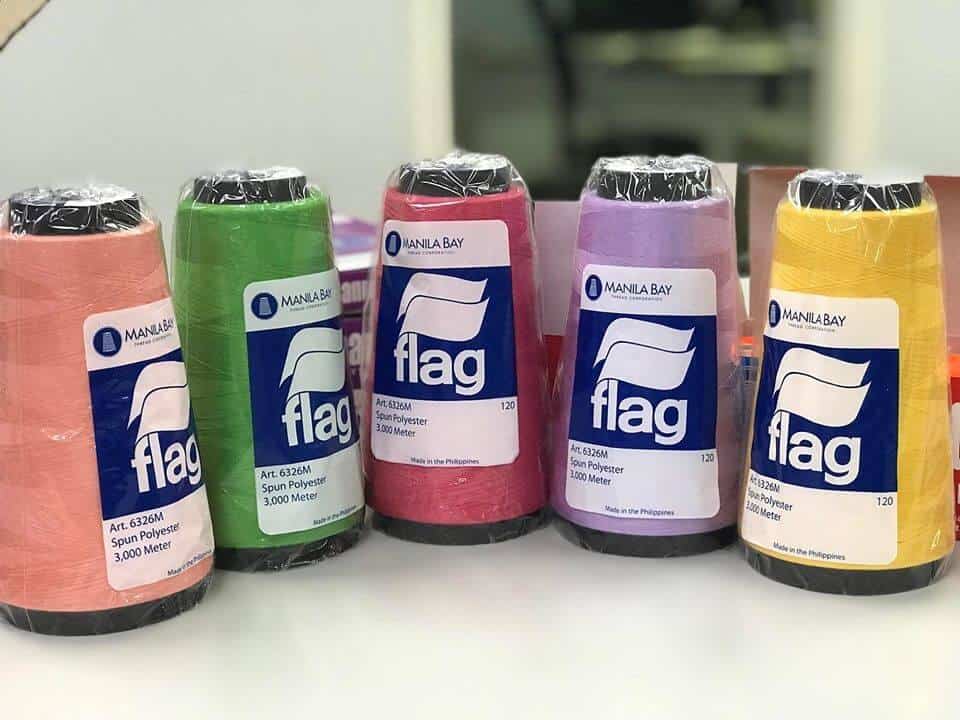
Sewing thread is available in both staple fiber and filament fiber varieties. The denier system measures filament thread fineness—with lower denier numbers indicating finer thread. Filament thread dimensions are denoted by denier, except that the last digit of the thread count is dropped. For example, a 160 denier thread carries a ticket number of 16.
2. Metric (Nm) Ticket Number
The Metric (Nm) system expresses thread count as the length in metres present per gram of thread. An Nm of 50/1 indicates that 50 metres of yarn weighs exactly 1 gram. For multiple plies such as 4-ply yarn, the ticket number becomes 50/4 Nm—meaning 50 metres of yarn weighs 4 grams.
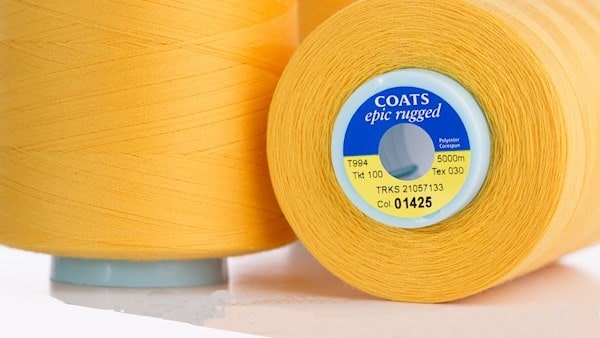
A 2-plied thread signifies two single yarns doubled together to form one ply yarn. Metric ticket number (Nm) 60/4 means four single yarns are doubled together to produce the thread, where each 60-metre length of single thread weighs 1 gram and the total 60-metre length of the 4-plied thread weighs 4 grams.
The formula for calculating the metric ticket number is:
Ticket Number (Metric) = Resultant Count × 3
The following table provides examples of conversion from Thread Number Expressed in Metric System to Ticket Number Expressed in Metric System:
| Thread Count (Metric) | Ticket Number (Metric) |
|---|---|
| 40/2 | 60 |
| 40/4 | 30 |
| 100/1 | 300 |
| 100/2 | 150 |
3. Cotton (Ne) Ticket Number
The Cotton Ticket Number follows the English Cotton Count system (Ne). For cotton threads, Ne 50/3 signifies a 3-plied sewing thread where the weight of each 840-yard hank equals 1 pound. The system measures the number of 840-yard lengths per pound of cotton yarn.
Cotton ticket counting uses the following equation:
Ticket Number (Cotton) = Resultant Count × 3
The following table provides examples of conversion from Thread Number Expressed in Cotton System to Ticket Number Expressed in Cotton System:
| Thread Count (Cotton) | Ticket Number (Cotton) |
|---|---|
| 56/2 | 84 |
| 56/3 | 56 |
| 56/4 | 42 |
| 66/2 | 99 |
| 66/3 | 66 |
| 66/4 | 50 |
Conversion of Ticket Number
The TEX system serves as the universal reference for converting between thread numbering systems. The following formulas enable accurate conversion:
- TEX to Metric tkt: 1000 ÷ TEX × 3
- TEX to Cotton tkt: 590.54 ÷ TEX × 3
- TEX to NeC: tex = 590.5 ÷ NeC, or NeC = 590.5 ÷ tex
- TEX to Nm: tex = 1,000 ÷ Nm, or Nm = 1,000 ÷ tex
Frequently Asked Questions
The following questions address common inquiries about sewing thread count and ticket number systems.
1. Between yarn count and ticket number, which term is most widely applied in the textile industry?
Both terms are widely used in their respective applications. Yarn count is the standard measurement for spinning, weaving, and knitting operations. Ticket number is the industry standard for sewing thread and is primarily used in the ready-made garments sector for specifying thread requirements in manufacturing.
2. Is yarn count always lower than ticket number for cotton?
No. For single-ply or double-ply sewing thread, the ticket number is always higher than the cotton yarn count. When three or more plies are twisted together to form the thread, the ticket number becomes equal to or lower than the yarn count, depending on the number of plies and their individual thicknesses.
3. Which sewing thread manufacturers specify ticket numbers on their threads?
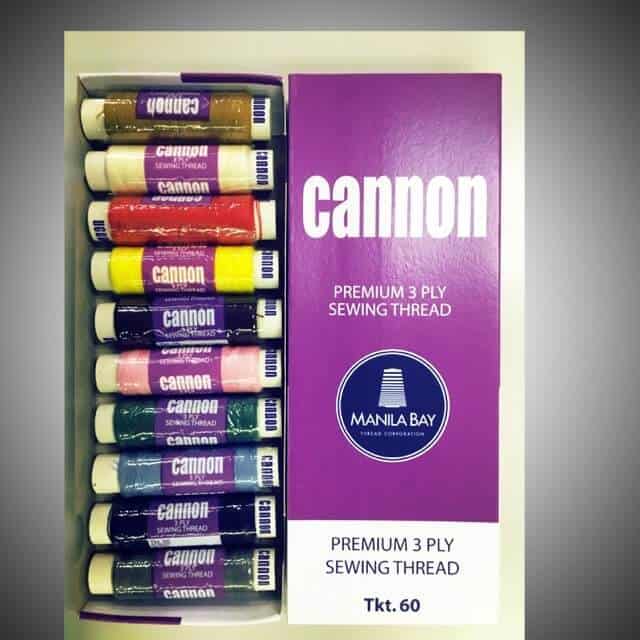
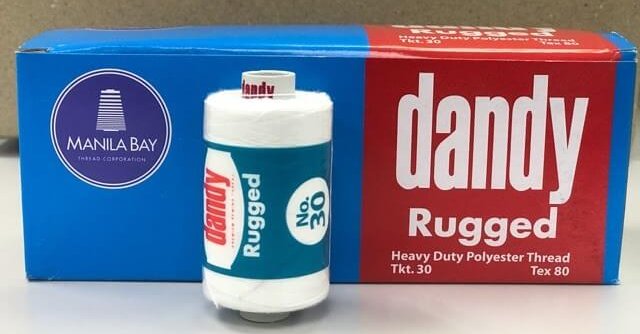
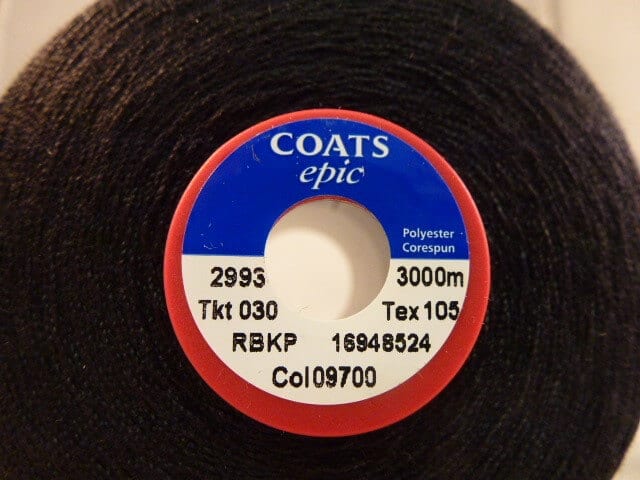
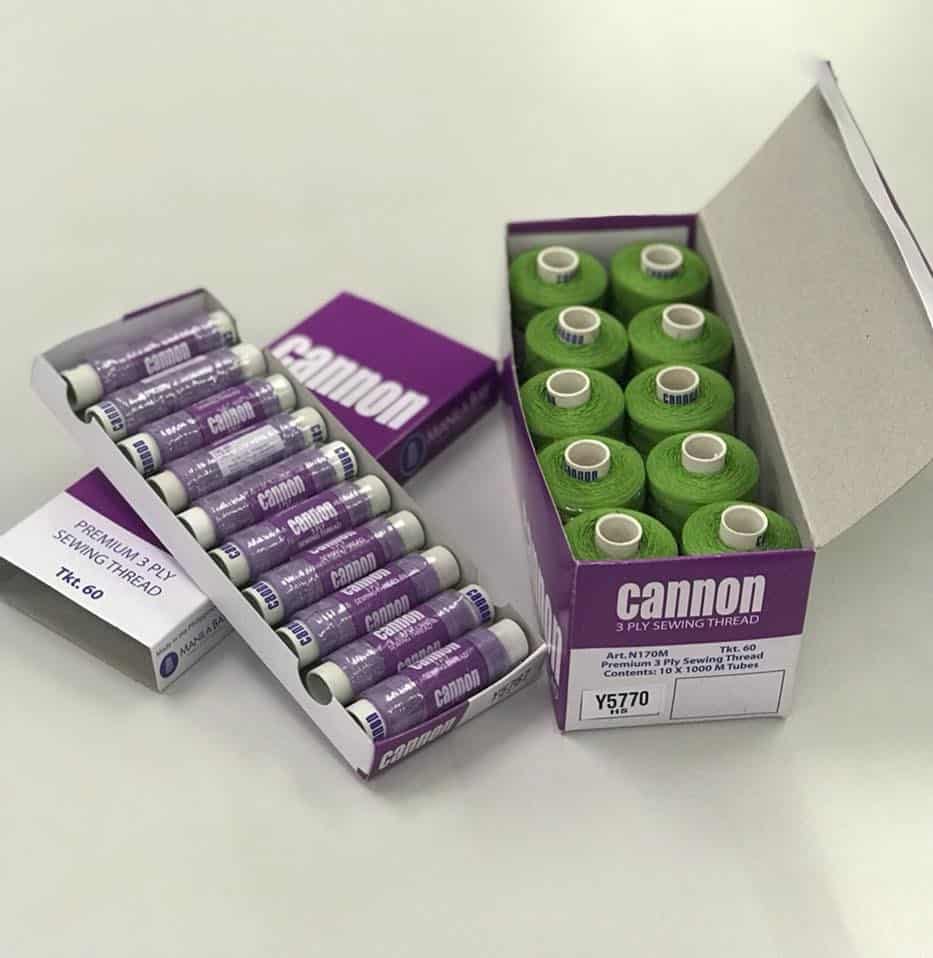
Several major thread manufacturers provide ticket numbers on their sewing thread products. These include Coats Group plc, Manila Bay Thread Corporation, SHISHI, SANJIAN, and LIDA. Ticket numbers enable consistent thread specification across the supply chain and ensure proper machine settings for sewing operations.
Key Specifications Quick Reference
| Measurement System | Unit | Definition |
|---|---|---|
| TEX | Grams per 1,000 metres | Direct count; higher value = thinner thread |
| Ne (Cotton Count) | No. of 840-yard hanks per pound | Indirect count; higher value = finer thread |
| Nm (Metric Count) | Metres per gram | Indirect count; higher value = finer thread |
| Denier | Grams per 9,000 metres | Direct count; higher value = thicker thread |
References
- Karthik, T., Ganesan, P. & Gopalakrishnan, D. (2017). Apparel Manufacturing Technology. Taylor & Francis Group. https://www.taylorfrancis.com/books/9781315367507
- Coats Group plc. (2020). Thread Products and Specifications. https://www.coats.com/en/Products?type=Threads
- Manila Bay Thread Corporation. Thread Product Catalog. https://www.manilabaythread.com
- Wikipedia. Yarn Count. https://en.wikipedia.org/wiki/Yarn_count


