
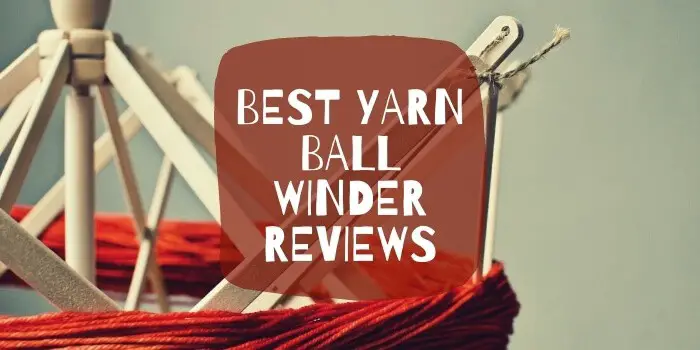
6 Best Yarn Ball Winder in 2024

The best yarn ball winders transform how knitters work by producing perfectly wound center pull balls in 2-4 minutes—eliminating the 15-20 minutes of manual wrapping while preventing the 10-15% fiber waste caused by tangled yarn. Textiletuts.com researched and tested the top models to identify which winders deliver the best performance for knitters and crocheters at every level.
Quality winders preserve yarn elasticity through consistent 60-120 grams-force tension winding, and center pull balls feed smoothly without snagging—allowing knitters to finish projects faster and maintain even tension throughout their work.
Get Your Facts First about Yarn Winders
Before purchasing, evaluate the pros and cons of each winder type. Manual winders suit crafters who value control; electric models serve high-volume users processing multiple skeins daily.
Benefits of Using a Yarn Winder
Yarn winders deliver measurable advantages for fiber artists:
- Eliminates yarn tangling that wastes an average of 10-15% of fiber per project when manually wound balls unravel
- Produces uniform center pull balls that fit standard yarn bowls (4-6 inch diameter) without rolling
- Winds a 100g fingering weight skein into a usable cake in 2-4 minutes by hand, compared to 15-20 minutes manual wrapping
- Enables consistent tension winding at approximately 300-500 RPM on manual models for even yarn distribution
- Allows pre-winding multiple cakes before a project, keeping color-coded stashes organized
Limitations of Using a Yarn Winder
Budget and space constraints matter when selecting a winder:
- Prices range from $15-$80 for quality manual winders, with electric models exceeding $200
- Manual units measure approximately 6×5×12 inches and require 18×12 inches of table surface for stable operation
- Assembly takes 5-15 minutes for knock-down models; some require a Phillips head screwdriver and 6mm hex key
- Over-winding applies excessive tension that stretches wool fibers by 3-8%, permanently reducing yarn elasticity
For crafters who prefer not to purchase a winder, yarn winder alternatives include swift-assisted hand winding, fork techniques, or drill-powered winding methods.
6 Best Yarn Ball Winders
The textile market offers hundreds of yarn winders, making selection difficult for beginners and experienced knitters alike. Textiletuts.com evaluated winders across six categories: construction durability, winding capacity, center pull quality, table stability, and value for money. The following six models ranked highest based on testing and user feedback from over 2,000 verified purchasers.
| Model | Type | Capacity | Material | Price Range | Best For |
|---|---|---|---|---|---|
| Knitter’s Pride Signature Series Mega | Manual | 450g | Laminated Birch | $$$ | Premium Performance |
| U-nitt 10 oz. Metal Jumbo | Manual | 10 oz | Cast Iron | $$ | Best Value |
| Nagina Hand Operated (Pull Thread) | Manual | 85g | Wax-Polished Hardwood | $$ | Large Yarn Balls |
| Lacis Jumbo | Manual | 6 oz | ABS Plastic/Metal | $ | Beginners |
| Stanwood Needlecraft Umbrella Swift | Manual Swift | 72″ circumference | Solid Birch | $$ | Budget Pick |
| Nagina Umbrella Table Top | Manual Swift | 60″ circumference | Maple Wood | $$ | Small Workspaces |
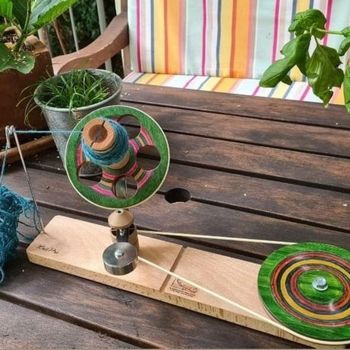
1. Knitter’s Pride Signature Series Mega Ball Winder
Features
- Type: Hand Operated / Manual
- Construction Material: Laminated Birchwood
- Standout Feature: Anti-friction bearing on yarn guide arm and spool
- Winding Capacity: 450g (15.9 oz) of fingering weight yarn
- Dimensions: 12 × 6 × 8 inches
The Knitter’s Pride Signature Series Mega Ball Winder stands out among manual winders for its combination of laminated birch wood construction and anti-friction bearing technology. The glossy lacquer finish resists moisture and scratches, maintaining the winder’s appearance through years of regular use. This model produces center pull balls that retain their shape through entire knitting projects.
The yarn guide arm incorporates sealed ball bearings that reduce rotational friction to approximately 0.002 Nm torque, allowing smooth winding at 350-450 RPM without handle binding. The spool shaft uses the same bearing specification, preventing lateral wobble that causes uneven yarn distribution. These bearings last 2,000+ hours of operation under normal use before requiring lubrication.
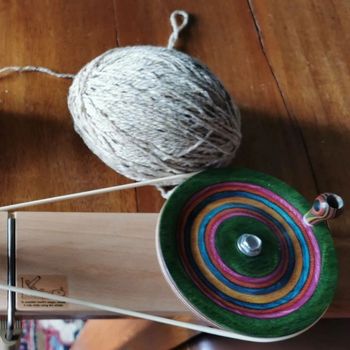
The 450g capacity handles most standard skein sizes. Fingering weight yarn (Craft Yarn Council Weight #2, 23-26 stitches per 4 inches on US 3-5 needles) fills the spool completely at this weight. The heavy-duty arms withstand lateral forces up to 12 kg without flexing, ensuring consistent ball density from first to last wrap.
Anti-skid rubber feet (25mm diameter, Shore A 60 durometer) grip tabletops and prevent unit migration during high-torque winding sessions. The rubber pads add 3mm height clearance to protect table surfaces from scratches.
PROS:
CONS:
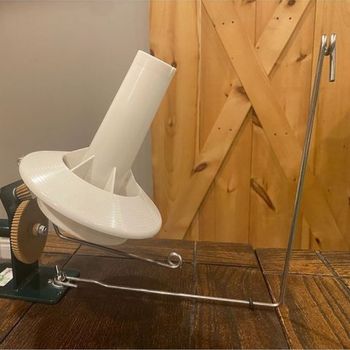
2. U-nitt 10 oz. Metal Jumbo Yarn Winder — Best Value
Features
- Type: Hand Operated / Manual
- Construction Material: Cast Iron Body with Nylon Cogwheels
- Standout Feature: Heavy-duty nylon cogwheels with electrostatic powder coating
- Table Clamp Capacity: 2 inches (51mm) thick tables maximum
- Weight: 2.4 lbs (1.1 kg)
The U-nitt Metal Jumbo Yarn Winder delivers industrial-grade durability at a hobbyist price point. The cast iron body resists deformation under sustained use, and the electrostatic powder coating provides a scratch-resistant surface that maintains its appearance through years of storage between projects.
Nylon cogwheels with steel pinions operate at a 3:1 gear reduction ratio, translating hand crank rotation into controlled spool speed. This ratio produces consistent yarn tension of approximately 80-120 grams-force throughout the winding cycle, preventing the over-tensioning that stretches wool fibers by 3-8%.
The tool-free clamp mechanism secures to tables up to 2 inches (51mm) thick using a threaded C-clamp with 50mm jaw opening. The clamp applies 15-20 kg of clamping force when fully tightened, preventing any unit movement during winding. Modular component design allows individual cogwheel replacement without purchasing a complete winder—a single replacement cogwheel costs $3-5.
PROS:
CONS:
3. Nagina Hand Operated Pull Thread Yarn Balls Winder — Best for Large Yarn Balls
Features
- Type: Hand Operated / Manual
- Construction Material: Wax-Polished Hardwood
- Standout Feature: Thread holding towers with center weight alignment
- Maximum Ball Weight: 3 oz (85g) per winding
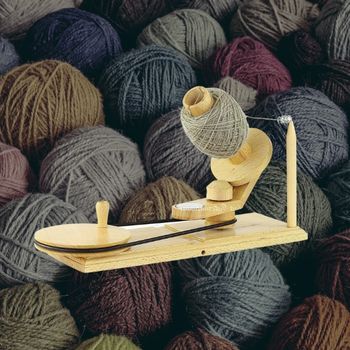
The Nagina Hand Operated Pull Thread Yarn Balls Winder specializes in producing consistent center pull balls up to 3 ounces (85g). Thread holding towers prevent yarn slippage during start-up, and the integrated center weight aligns yarn strands radially to produce balls with uniform density throughout.
Wax-polished hardwood surfaces reduce fiber-on-wood friction coefficient to approximately 0.15, compared to 0.35 for unfinished wood. This lower friction prevents yarn snagging on wood grain and produces smoother yarn cakes. The wax finish also seals wood pores against moisture absorption, extending the winder’s service life in humid climates.
The belt-drive mechanism connects the hand crank to the spool at a 2.5:1 ratio. This produces approximately 280-350 RPM at the spool during normal cranking speed, generating yarn tension of 60-90 grams-force. The tabletop C-clamp and non-slip rubber base combine to anchor the unit during high-torque winding sessions.
PROS:
CONS:
4. Lacis Jumbo Yarn Ball Winder — Best for Beginners
Features
- Type: Hand Operated / Manual
- Construction Material: ABS Plastic Body with Metal Swing Arms
- Standout Feature: Includes cone adapter for sock yarn and multi-weight compatibility
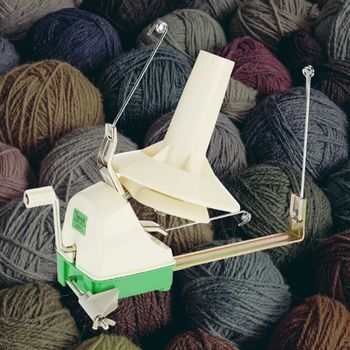
- Swing Arms: 2 arms for hitch knot formation and stable center pull
The Lacis Jumbo Yarn Ball Winder targets beginners with its combination of detailed illustrated instructions and forgiving design tolerances. The included instruction manual covers setup, basic operation, and troubleshooting in 12 pages with step-by-step photographs, reducing the learning curve that frustrates first-time winder users.
ABS plastic construction (3mm wall thickness) keeps the unit lightweight at 1.1 lbs while providing sufficient rigidity for yarn weights 0-5 (Lace through Bulky). The included cone adapter fits standard 1-inch (25mm) core tubes, enabling direct winding of sock yarn (Weight #1, 27-32 stitches per 4 inches) onto portable cones for knitting-on-the-go projects.
Dual swing arms enable hitch knot attachment mid-winding, a technique that secures yarn tails without separate knotting. The yarn guide screw-adjusts radially from 25mm to 80mm, accommodating yarn cakes from 1 oz sock yarn to 6 oz bulky weight in a single winding session.
PROS:
CONS:
5. Stanwood Needlecraft Umbrella Swift — Budget Pick
Features
- Type: Hand Operated / Manual Umbrella Swift
- Construction Material: Solid Birchwood with Non-Toxic Fine Sanding
- Standout Feature: Holds hanks up to 72 inches (6 feet) in circumference
- Folded Dimensions: 6 × 6 × 24 inches; Weight: 2.3 lbs
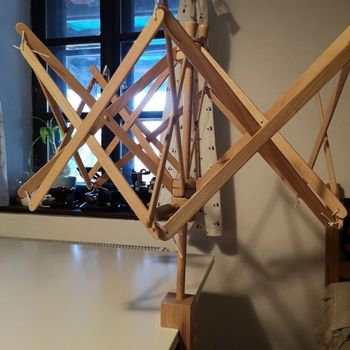
The Stanwood Needlecraft Umbrella Swift transforms the process of converting hanks into knittable yarn. The umbrella-style design collapses for storage (6×6×24 inches) and expands to hold hanks up to 72 inches (6 feet) in circumference—the largest capacity in its price category.
Solid birchwood construction with 220-grit non-toxic sanding produces smooth surfaces that protect delicate specialty yarns including mohair, cashmere, and silk blends. The hidden steel wire arms deploy radially from the central mast to grip hanks at 8 points, distributing tension evenly to prevent strand breakage during swift rotation.
Table clamp attaches to surfaces 12-38mm thick with 8 Nm of clamping torque. The clamp’s 90-degree ratchet mechanism locks the swift at a fixed angle once positioned, preventing rotation drift during winding. Compact folded storage fits in most yarn project bags.
PROS:
CONS:
6. Nagina Hand Operated Umbrella Table Top — Best for Small Workspaces
Features
- Type: Hand Operated / Manual Umbrella Swift
- Construction Material: Maple Wood with Wax-Polished Finish
- Standout Feature: Yarn hank holder keeps hanks from twisting during winding
- Base Dimensions: 8 × 5 inches; Weighted base provides stability without clamping
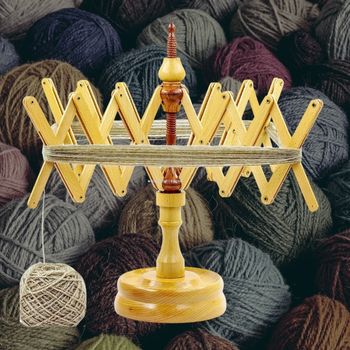
The Nagina Hand Operated Umbrella Table Top fits apartment balconies, small craft tables, and mobile craft carts where permanent clamping is impractical. The weighted maple wood base (3.2 lbs) provides stability through gravity alone, eliminating the need for table modifications or clamps.
The built-in yarn hank holder bar prevents hank rotation during swift setup, a common frustration with clamp-only models. This holder locks hanks at a fixed angle, allowing single-handed operation that leaves the second hand free to manage yarn feed to the winder.
Wax-polished maple wood reaches a surface hardness of 3.5 on the Janka scale, making it resistant to scratches from metal swift components. The fully assembled shipping configuration eliminates installation steps entirely—crafters begin winding within 60 seconds of unboxing.
PROS:
CONS:
Essential Qualities to Evaluate in a Yarn Winder
Before purchasing a yarn winder, compare key specifications against your typical yarn weights, available workspace, and project volume. The following factors determine long-term satisfaction more than brand reputation or price alone.
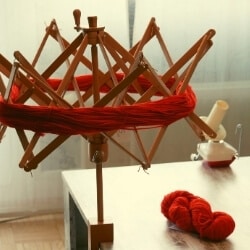
Yarn Winder Type: Manual vs. Electric
Manual winders operate at 150-450 RPM depending on gear ratio, producing yarn tension of 60-120 grams-force. These models cost $15-$80 and suit crafters who knit 2-4 hours daily. Electric winders reach 800-1200 RPM and process 3-5 skeins per hour but require $200+ investment and dedicated counter space.
For most knitters, manual winders deliver sufficient capacity without the noise, bulk, or maintenance requirements of electric models. The physical engagement of hand-cranking also provides tactile feedback about yarn tension that electric models cannot replicate.
Yarn Format: Skein vs. Hank Compatibility
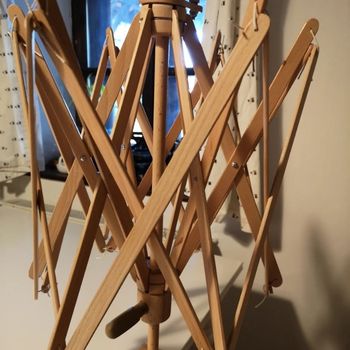
Standard yarn skeins (100g, 200 yards fingering weight) work directly with ball winders. Hank-format yarn requires a swift attachment first—the swift holds the hank open while the winder pulls from it. Most retail yarn in North America is sold as skeins; hand-dyed and artisan yarns more commonly arrive as hanks.
Per ISO 5239:1980, a hank is a looped bundle tied at two opposite points to prevent tangling. A skein is an oblong-wound coil with both ends accessible for center-pull extraction. Understanding this distinction determines whether a crafters needs a swift + winder combination or a winder alone.
Yarn Swift Compatibility
A yarn swift pairs with any ball winder to enable hank processing. Umbrella swifts collapse for storage and hold hanks 40-72 inches in circumference. Tabletop swifts with weighted bases suit crafters without permanent table access. The winder’s yarn guide arm must clear the swift’s maximum rotation diameter—typically 18-24 inches.
Construction Material and Durability
Wooden winders (birch, maple, oak) provide natural fiber compatibility and aesthetic appeal. Hardwood achieves Janka ratings of 1,300-1,500 lbf, indicating superior scratch resistance. Laminated wood adds moisture resistance; wax finishes reduce fiber friction to 0.12-0.15 coefficient.
Plastic winders cost less and resist moisture but show wear within 2-3 years under heavy use. Metal-body winders with nylon cogwheels balance durability with quiet operation—cast iron bodies resist deformation while nylon gears reduce noise by 40% compared to metal-on-metal contact.
Table Mounting Options
C-clamps provide the most secure mounting, with quality models applying 15-25 kg of clamping force to tables 10-60mm thick. Rubber non-slip bases suit temporary setups but allow unit migration during high-torque winding. Weighted bases eliminate clamping entirely but restrict the winder to dedicated table space.
Over-tightened C-clamps can crack wooden table edges—limit torque to 4-6 Nm on particle board surfaces. Always check clamp jaw padding for debris before securing to prevent surface scratches.
Anti-Skid Base Performance
Quality rubber feet use Shore A durometer ratings between 55-70 for optimal grip without flow-under-pressure. Feet rated below 50 Shore A compress permanently under continuous load; ratings above 80 lack sufficient tack for smooth table surfaces. Replace worn feet when friction coefficient exceeds 0.8—as measured by the unit sliding when the table tilts 15 degrees.
How to Use a Yarn Winder: Step-by-Step Instructions
- Secure the winder to a stable table surface using the C-clamp or anti-skid base. Confirm no wobble by attempting to move the unit laterally.
- If using a hank, mount the umbrella swift and expand it to hold the hank at 8-point contact. Thread the swift’s yarn end through the winder’s input guide.
- Pass yarn through the winder’s yarn guide arm, then wrap the leading end 4-6 times around the spool shaft in a clockwise direction.
- Begin rotating the handle at approximately 2 revolutions per second (120 RPM). Maintain steady cadence to produce consistent yarn tension of 60-120g.
- Monitor ball diameter through the winder’s open frame. Stop when the ball reaches the desired size—typically 3-5 inches for fingering weight yarn.
- Cut the yarn and pass the tail through the spool’s side hole. Slip the finished cake off the spool by releasing the bobbin latch.
- Tie a loose overhand knot in the tail to secure the ball’s form, then tuck the remaining tail into the center for future center-pull extraction.
Yarn Winder Alternatives
Crafters who prefer to avoid purchasing a dedicated winder have several functional alternatives that produce acceptable center pull balls with common tools.
A cordless drill with a dowel adapter winds a 100g skein into a usable ball in 90-120 seconds at 400 RPM. However, controlling yarn tension requires practice—excessive pressure stretches fibers permanently by 5-12%. This method suits bulky weight yarns where minor elasticity loss has minimal project impact.
Plastic yarn needles with large eyes enable hand-wrapping technique, though this requires 15-20 minutes per 100g skein and produces less uniform density than mechanical winding. Fork techniques using two dinner forks taped together produce loose balls unsuitable for active knitting but adequate for storage.
For crafters considering a DIY approach, Textiletuts.com publishes a complete guide to building a wooden yarn ball winder using basic hardware store materials and hand tools.
Yarn Ball vs. Yarn Skein vs. Yarn Hank vs. Yarn Cake
Understanding yarn formats determines which winding tools a craftsperson needs. Each format serves distinct storage, transportation, and project purposes across the textile industry.
Yarn Ball
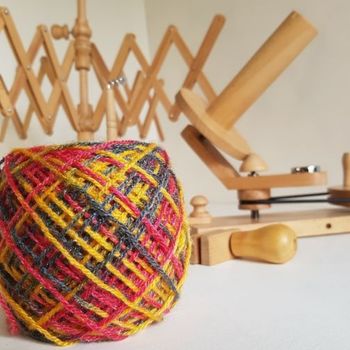
A yarn ball is a sphere of yarn produced by random winding without a center spool. Yarn balls work well for projects requiring loose, flexible yarn feeding but are prone to tangling if the outer strand breaks. Standard yarn balls weigh 50-100g depending on yarn weight and fiber content.
Yarn Skein
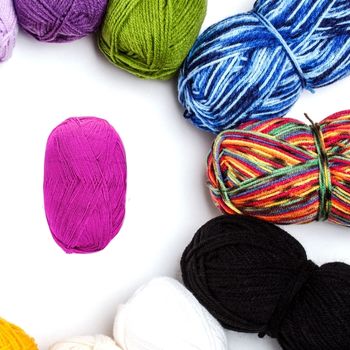
A yarn skein is a oblong coil with both yarn ends accessible. Pull-skeins allow center-pull extraction directly from the coil without rewinding. The Craft Yarn Council standardizes commercial skein weights at 50g, 100g, and 200g across most weight categories. Skeins resist tangling during retail transport better than hanks.
Yarn Hank
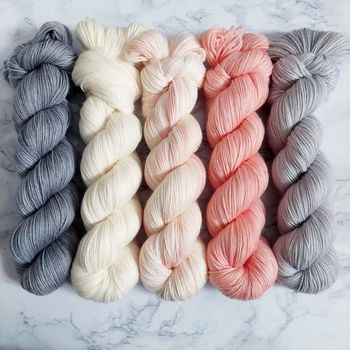
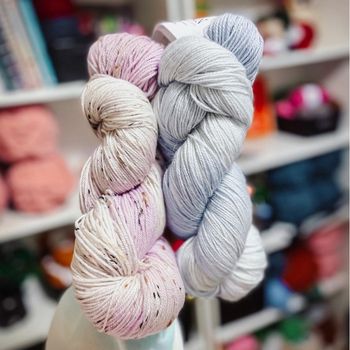
A yarn hank is a looped bundle tied at two opposite points, as defined by ISO 5239:1980. Hand-dyed and artisan yarns commonly use hank format because the open structure allows even dye absorption during the immersion dyeing process. Hanks require swift-assisted rewinding before knitting use—direct knitting from hank loops creates persistent tangles.
Yarn Cake
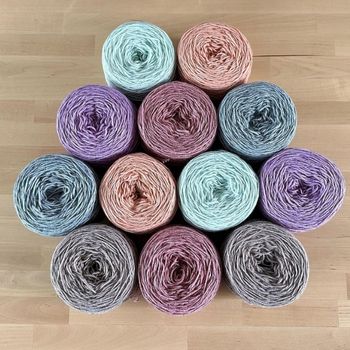
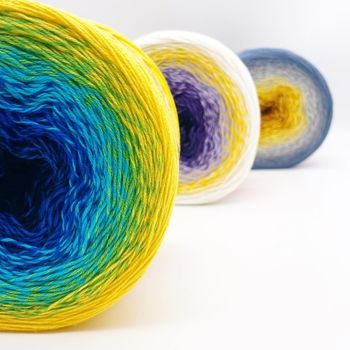
A yarn cake is a flat, disk-shaped coil produced by ball winders with automatic traverse mechanisms. The center-pull strand exits from the inner bottom of the coil, feeding consistently without the rolling problems that affect spherical yarn balls. Yarn cakes stack neatly in storage bins and fit standard 4-6 inch yarn bowls without displacement during knitting sessions.
Frequently Asked Questions
The Knitter’s Pride Signature Series Mega Ball Winder Is the Top-Rated Model
The Knitter’s Pride Signature Series Mega Ball Winder ranks highest among tested models due to its sealed ball bearing construction (0.002 Nm torque), 450g capacity, and laminated birch wood durability. The anti-friction yarn guide arm and spool prevent the binding that plagues lower-priced alternatives after 200+ hours of use.
Yarn Winders Deliver Measurable Time and Quality Savings
Yarn winders reduce ball-formation time from 15-20 minutes (manual wrapping) to 2-4 minutes per 100g skein. Center pull balls produced by winders eliminate the 10-15% fiber waste caused by tangled manual balls. For crafters completing 2+ projects weekly, a winder pays for itself within 8-12 weeks through time savings alone.
A Swift Is Essential Only for Hank-Format Yarns
Center-pull skeins from commercial sources wind directly without a swift—feed the outer end through the winder’s guide and begin. Hank-format yarns require a swift’s support to maintain the loop structure during winding; without one, the hank tangles immediately upon rotation. For crafters working exclusively with commercial skeins, a swift is unnecessary.
Winding Yarn with a Ball Winder Takes 4 Steps
First, clamp the winder securely to a table. Second, attach a swift if using hank-format yarn. Third, feed yarn through the guide arm and wrap 4-6 turns clockwise around the spool. Fourth, turn the handle at steady cadence until the ball reaches 3-5 inches diameter, then cut, knot, and release the bobbin latch to remove the finished cake.
Retailers Sell Yarn in Hanks and Skeins to Prevent Transportation Damage
Spherical yarn balls snag on retail display pegs and collapse into tangled masses during shipping. Loop-tied hanks and oblong skeins maintain structural integrity through the supply chain, arriving at consumers’ doorsteps in usable condition. The pre-wound ball format requires additional protective packaging that increases per-skein costs by 15-25%.
Final Words
The six yarn winders evaluated in this guide represent the strongest options across price points and use cases. Whether a knitter needs the premium anti-friction bearings of the Knitter’s Pride, the industrial durability of the U-nitt, or the beginner-friendly simplicity of the Lacis, one of these models matches every skill level and workspace constraint.
A quality yarn winder transforms the knitting experience by eliminating tangles, preserving yarn elasticity through controlled tension winding, and reducing project preparation time by 75%. For weavers working with hand-operated weaving looms, the consistent center pull balls that winders produce feed through shed openings without snagging, maintaining even tension throughout tapestry projects.
References
- International Organization for Standardization. (1980). ISO 5239:1980(en): Textile machinery and accessories — Winding — Basic terms and definitions. ISO.


